
Week 1–2
- Greet neighbors in the hallway or street — a brief hello or introduction note is enough.
- Find your gemeente newcomer page and bookmark local event listings.
- Join building or street WhatsApp when invited; use it for practical alerts first.
Life in the Netherlands
Learn how Dutch communities work, how to build social connections and how to feel at home after moving to the Netherlands.
Quick answer
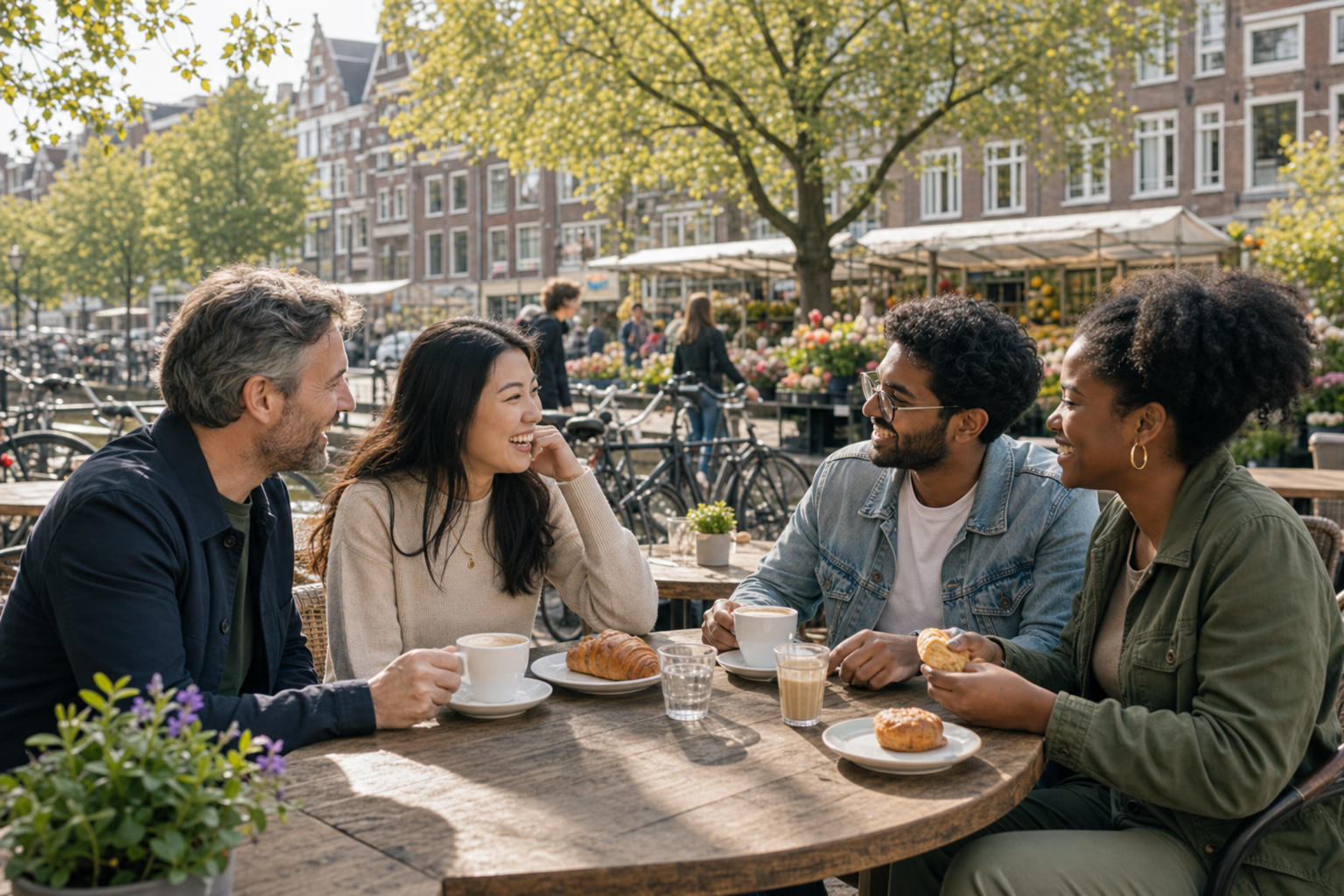
Dutch communities are often organized, local, activity-based and welcoming once relationships develop.
Many expats build successful social lives through sports, hobbies, volunteering, language learning and neighborhood activities.
Consistency in one or two social routes usually matters more than trying every channel in the first month.
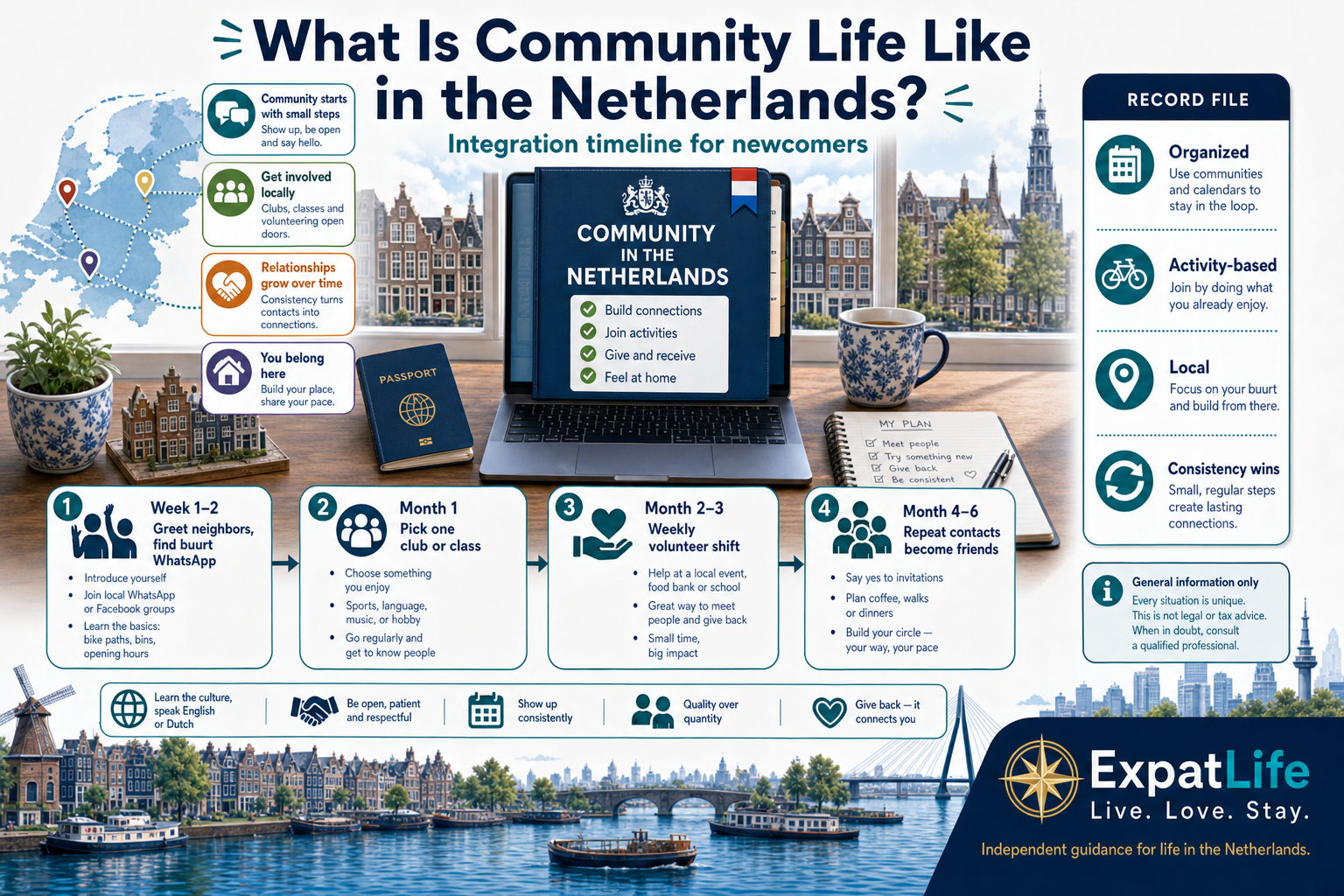
Week 1–2
Month 1
Month 2–3
Month 4–6
At a glance
Six pillars shape everyday social life in the Netherlands — use the visual below to choose one or two routes for your first months.
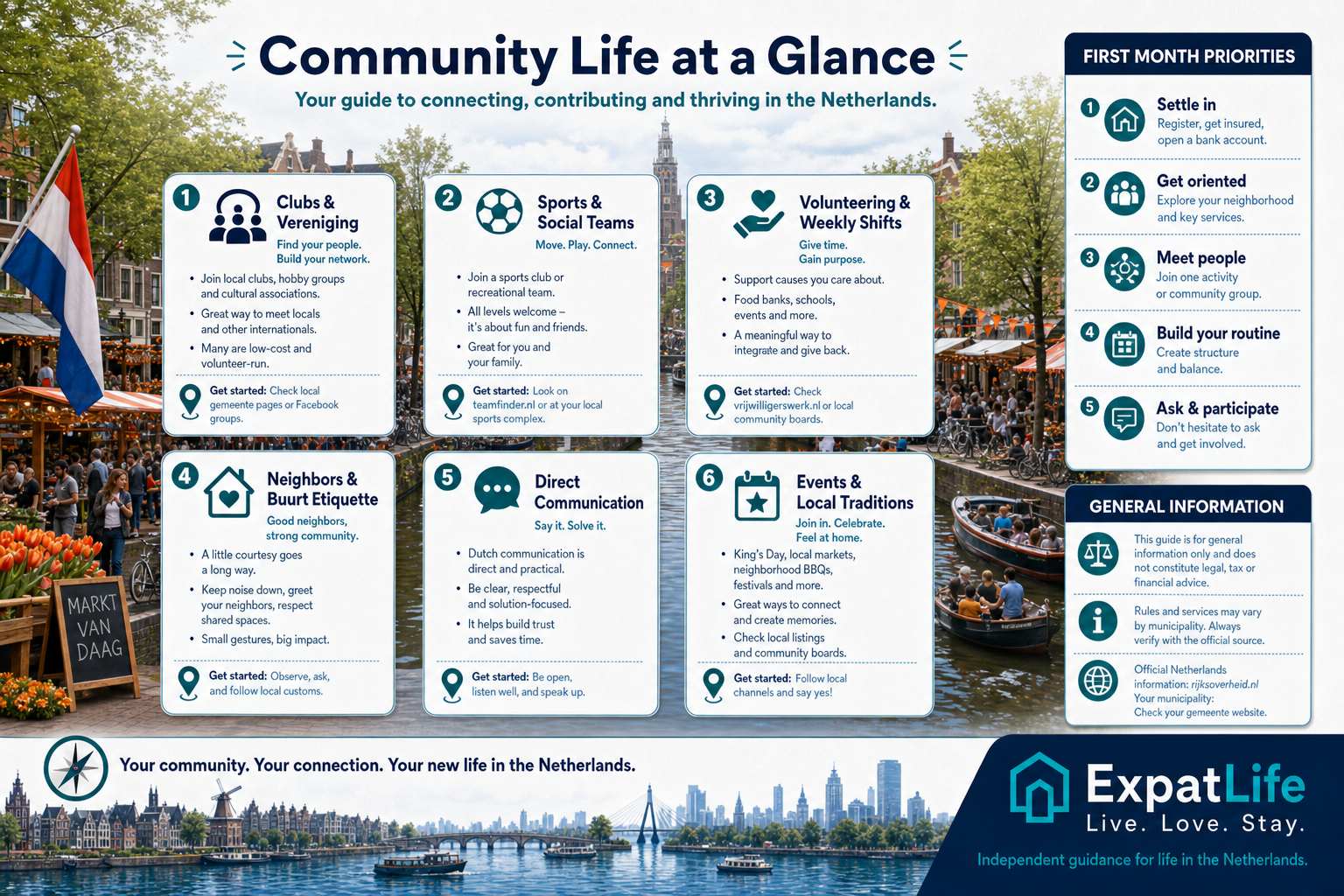
Sports and hobby verenigingen are a mainstream way adults meet people outside work — ask about proefles trial sessions.
Football, cycling, running and tennis clubs combine fitness with team drinks, tournaments and weekend events.
Food banks, libraries and shelters often prefer the same weekly volunteer — reliable shifts build familiarity fast.
Hallway greetings, quiet-hour rules and buurt WhatsApp groups shape everyday life in apartments and terraced streets.
Plain feedback is often practical, not personal — confirm plans explicitly and ask clarifying questions when tone feels unclear.
King's Day, weekly markets, buurt BBQs and library programs offer recurring low-pressure social touchpoints.
Continue into day-one through month-one Living guides for transport, apps, payments and first-week sequencing alongside community settling.
Open survival guideMany Dutch social circles are built around shared activities rather than spontaneous street friendships. Sports clubs, hobby associations, parent groups, neighborhood initiatives and professional networks all create structured ways to meet people repeatedly.
Community participation often means showing up consistently. Local involvement — from a weekly run group to a library volunteer shift — signals reliability and opens deeper conversations over time.
This is not a uniform national personality type. Neighborhoods, cities and individual contexts differ widely. The practical pattern is activity-first social life: find a recurring group, participate regularly and let friendships develop naturally.
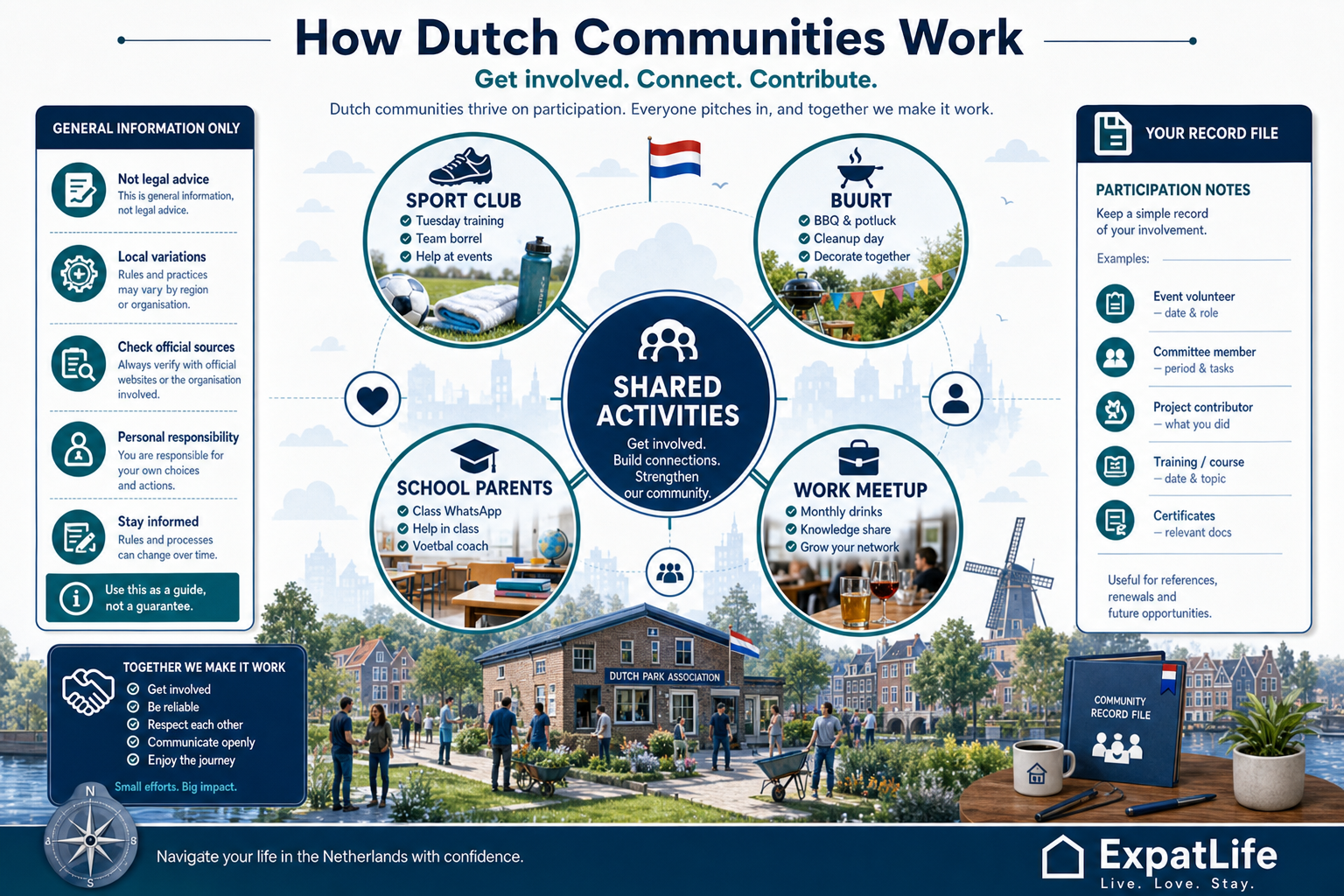
Sports, music, hiking and hobby clubs provide scheduled contact and shared goals.
Neighborhood associations, buurt BBQs and street initiatives connect residents to their area.
School parents, children's sports and playgroups anchor family social life.
Industry meetups, coworking communities and alumni networks support career movers.
There is no single secret route — most successful newcomers combine two or three channels and stay with them for several months. One-off networking events rarely replace the familiarity built through a weekly club or class.
Sports clubs, language courses, volunteer shifts, professional meetups, local festivals and neighborhood activities each offer different social depth. Try routes that match your energy level and schedule rather than forcing the most popular option.
Examples: joining a beginner football training group in Rotterdam, attending a weekly Dutch café at a local library in Utrecht, volunteering at an animal shelter in The Hague, or joining a cycling club with social rides in Amsterdam.
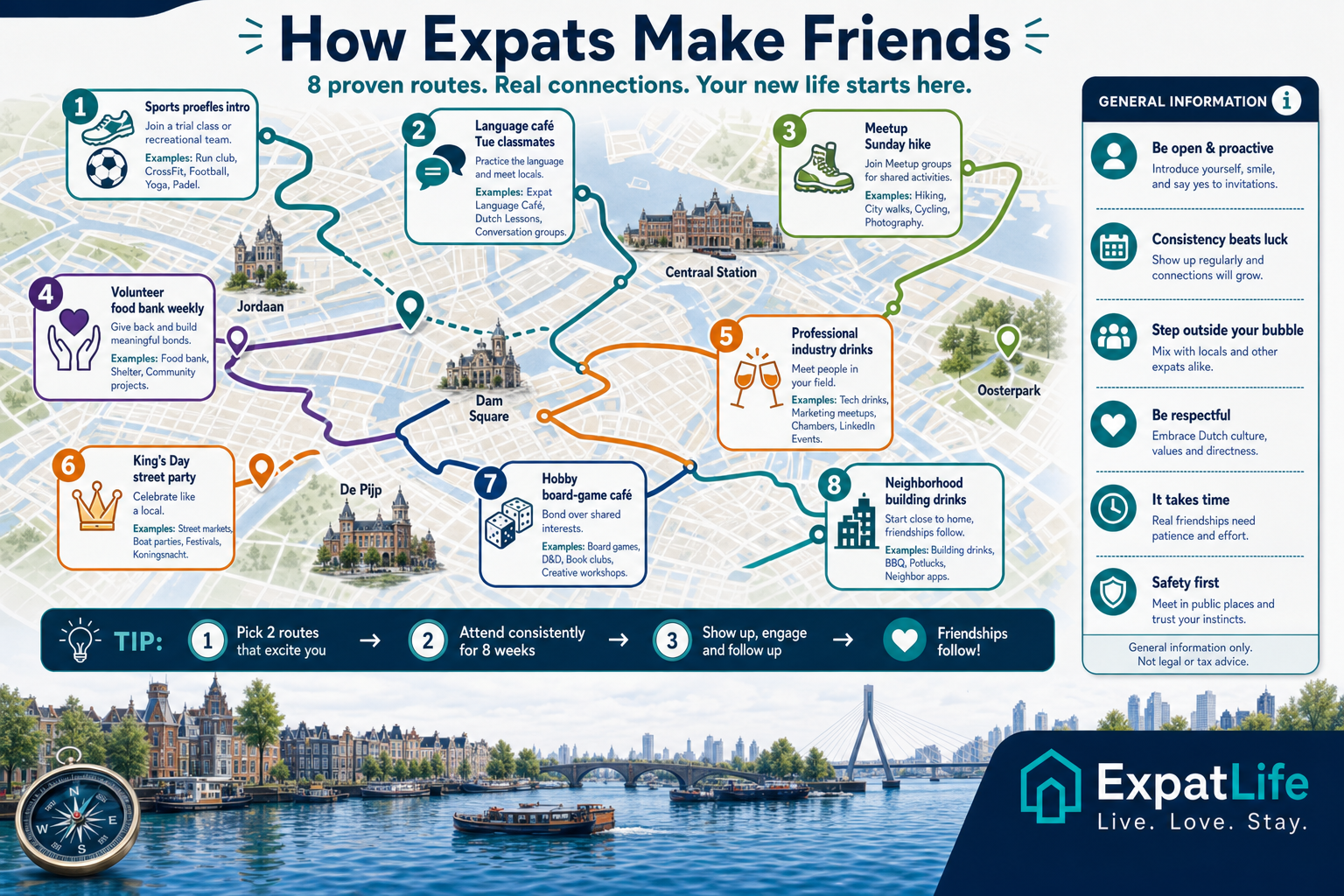
| Route | Example | First step |
|---|---|---|
| Sports club | Beginner football training in Rotterdam or parkrun in Utrecht | Search local vereniging site for proefles or social team signup |
| Language café | Weekly Dutch conversation at a library in The Hague | Book municipal or library program — same day each week |
| Volunteering | Saturday food-bank shift or shelter dog-walking | Apply for a recurring slot, not a one-off open day |
| Neighborhood | Buurt BBQ or building introduction after move-in | Introduce yourself briefly; accept small street or hall invitations |
Football, tennis, running and cycling clubs often welcome newcomers — ask about intro sessions and social teams.
Municipal courses, library cafés and private schools create recurring classmates and practice partners.
Hobby, language and professional Meetup groups are common in Amsterdam, Rotterdam and Eindhoven.
Food banks, shelters and community centers offer structured weekly contact with locals.
Industry events and coworking communities help career movers — pair with a local club for balance.
Markets, King's Day, neighborhood festivals and library programs are low-pressure entry points.
Board games, photography, music and hiking groups exist in most cities via clubs or Meetup.
Building drinks, street clean-ups and buurt BBQs help you meet people who live near you.
Dutch communication is often described as direct, honest and efficient. In meetings, neighbor discussions and even friendly feedback, people may state opinions plainly rather than layering indirect hints.
Newcomers sometimes interpret this as coldness or unfriendliness. In many contexts it is practical: addressing an issue quickly, agreeing on plans clearly or giving actionable feedback without excessive softening.
Balance matters on both sides. Learning local norms — while keeping your own communication style — reduces friction. When tone feels unclear, asking a clarifying question is usually acceptable and often appreciated.
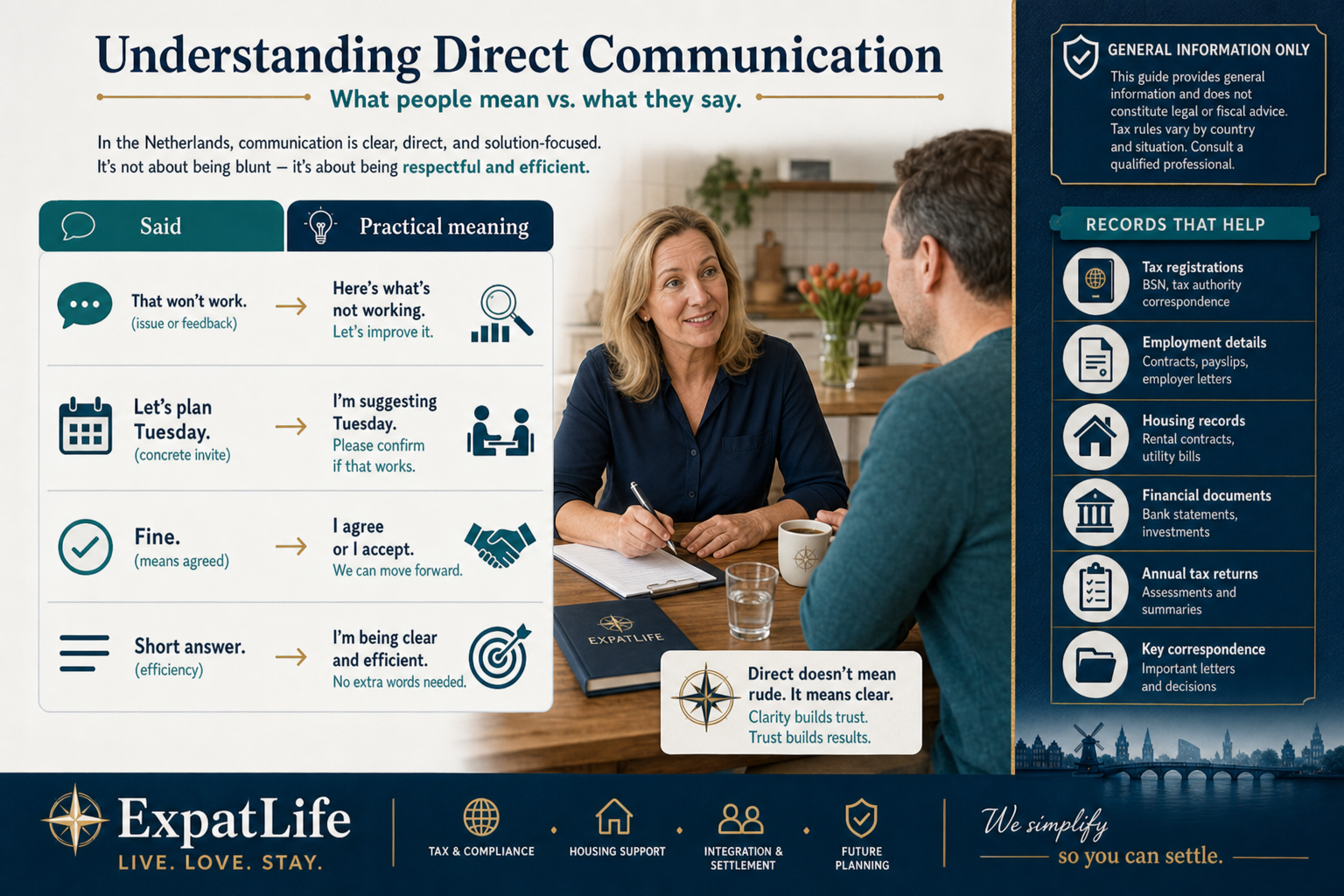
| What's said | Practical meaning |
|---|---|
| That will not work | Issue-focused feedback — often about the plan or problem, not you personally. |
| Let's plan Tuesday at 19:00 | Concrete invitation — confirm yes or no rather than assuming flexibility. |
| Fine / prima | Agreement confirmed — short answers can mean efficiency, not dismissal. |
| Direct question about noise or bikes | Practical neighbor issue — respond calmly with a clear next step. |
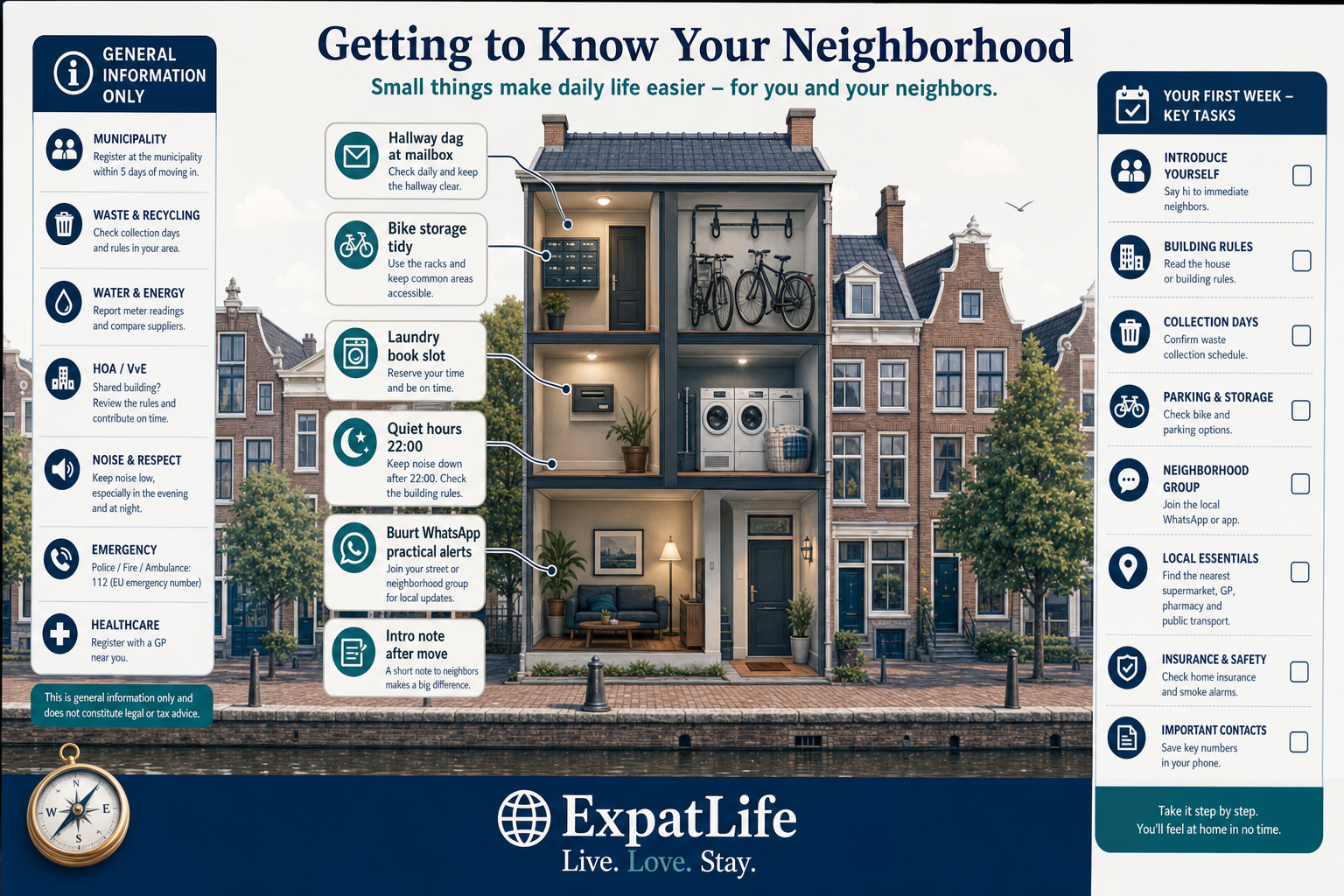
Neighborhood life in the Netherlands often starts with small rituals: greeting neighbors in the hallway, nodding on the street, or a brief introduction when you move in. These gestures signal that you are part of the building or street community.
Many areas use WhatsApp groups for building alerts, lost keys, package deliveries or street events. Join when invited and use them practically — they are rarely mandatory but often helpful.
Neighborhood initiatives include community gardens, clean-up days, local markets and buurt BBQs. Municipal websites and library bulletin boards list activities that vary by gemeente.
Clubs (verenigingen) are a cornerstone of Dutch social life for children and adults. Joining one club — and attending regularly — is often more effective than attending ten one-off events.
Football dominates culturally, but tennis, running, cycling, hiking, fitness, board games and music offer strong communities too. Many clubs run beginner courses, social leagues or 'proeflessen' (trial sessions).
Club membership usually involves a modest fee, a predictable schedule and optional social events. The social layer — team drinks, tournaments, volunteer board roles — is where many adult friendships deepen.
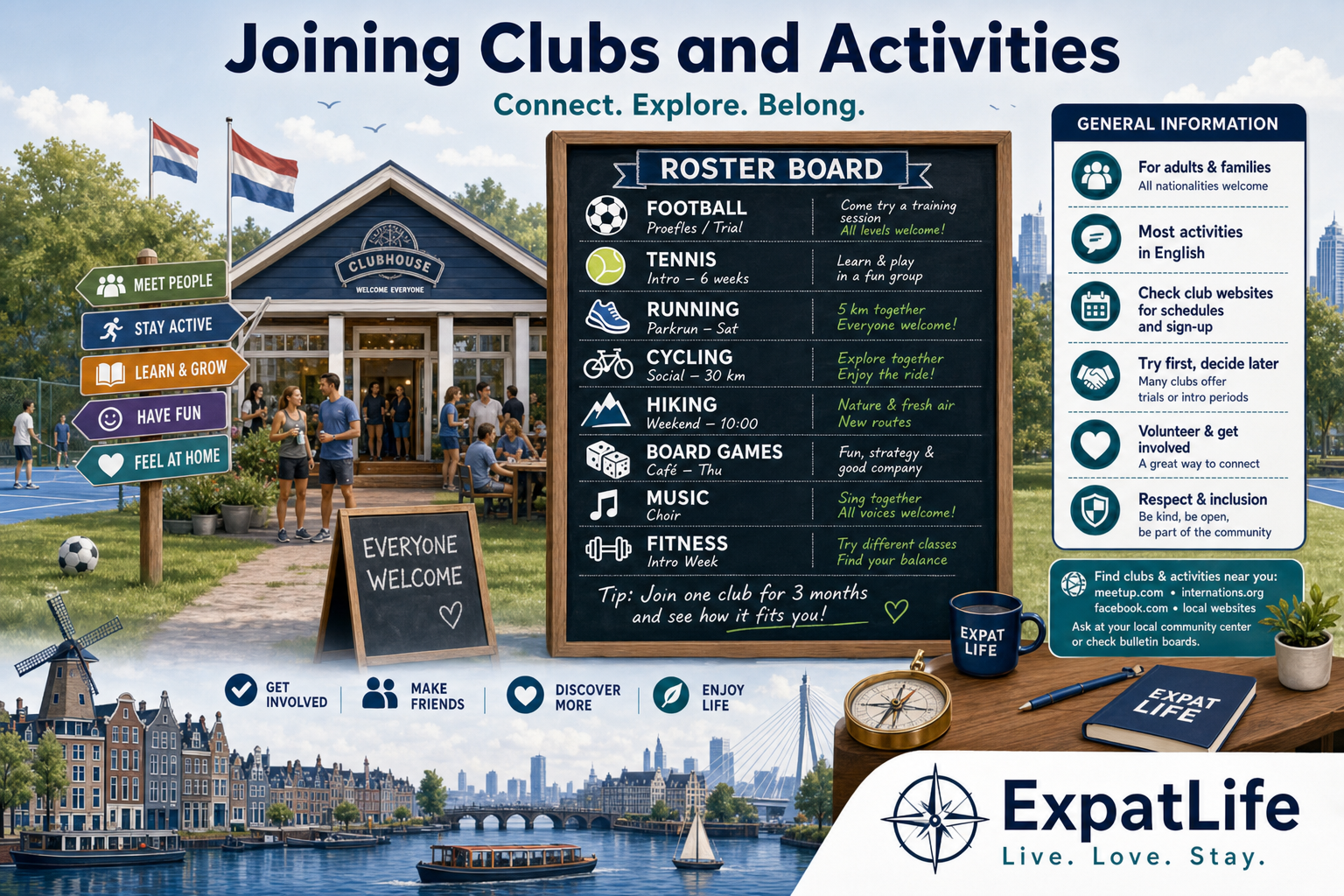
Local clubs and five-a-side leagues are everywhere — many offer social or beginner teams.
Clubs often combine lessons, ladder play and summer tournaments with clubhouse culture.
Park runs, club training and charity races create weekly group contact.
Touring clubs and social ride groups are popular — especially in flatter regions.
Walking associations plan weekend routes and coach newcomers on gear and pace.
Cafés and clubs host open evenings — low commitment and easy conversation.
Choirs, bands and community music schools welcome hobbyists at many skill levels.
Gyms and CrossFit boxes often run intro weeks — pair with a club for deeper social ties.
Volunteering can help you meet people, practice Dutch and integrate faster while contributing to your community. Many organizations value reliable weekly volunteers more than occasional one-day help.
Examples include animal shelters, food banks, community centers, environmental clean-up projects, library programs and cultural organizations. Municipal websites and Volunteer the Netherlands (Vrijwilligerswerk) style portals list local openings.
Eligibility, language requirements and time commitments vary. Start with a role that matches your language level and schedule, then expand as confidence grows.
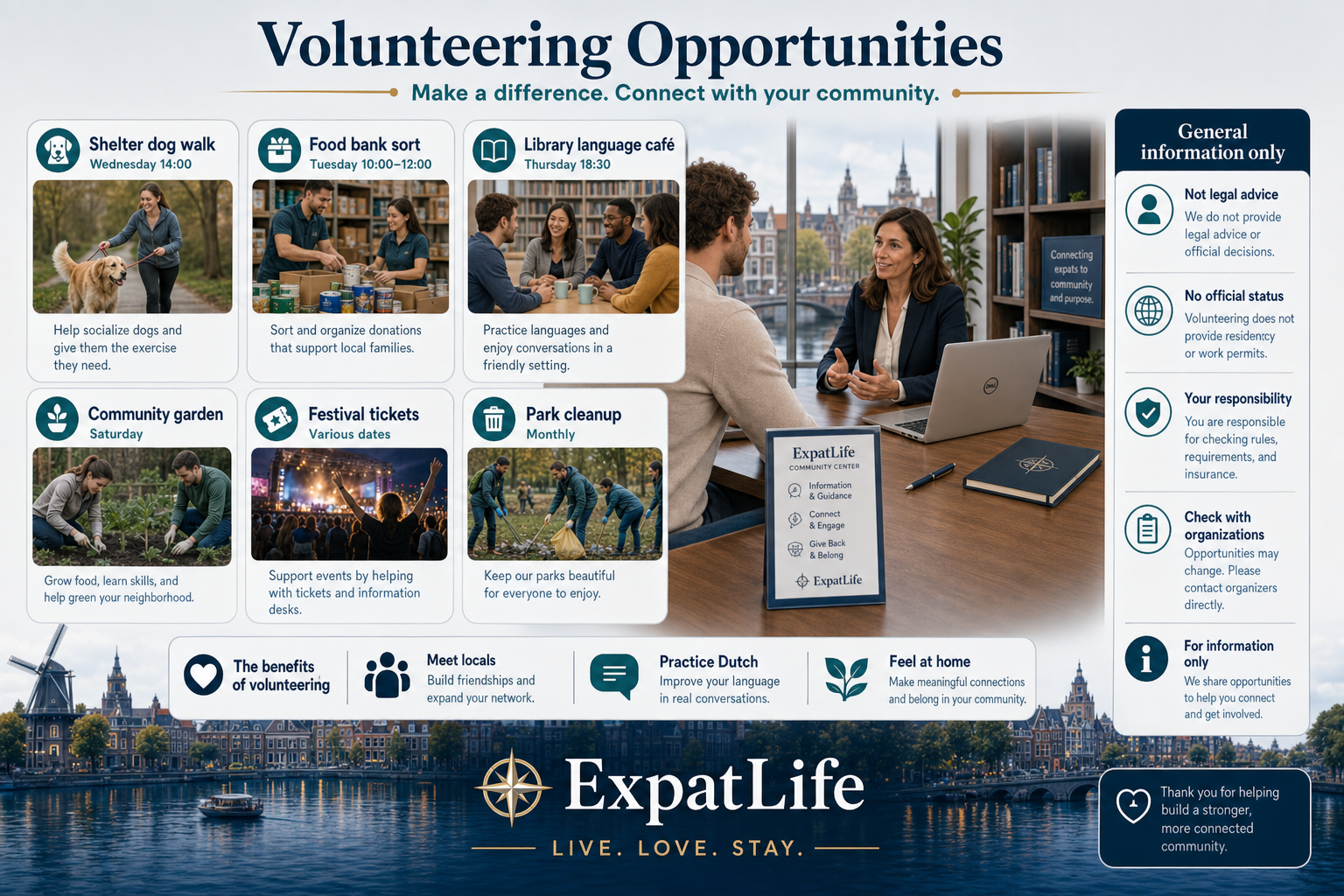
Dog walking and care shifts combine routine contact with practical tasks.
Event support, café service and newcomer programs welcome international volunteers.
Park clean-ups and community gardens connect you to neighborhood activists.
Museums, festivals and arts venues often need ticket, guide and logistics help.
Sorting and distribution shifts are common entry points with clear schedules.
Language cafés, children's hours and shelving roles support language practice.
National volunteer portal — search by city, cause and weekly availability.
Open resourceMunicipal pages often list integration programs, language cafés and local volunteer desks.
Open resourceMany public libraries run free conversation groups — good for language plus social contact.
Open resourceCommunity events provide seasonal rhythm and low-pressure social contact. King's Day transforms streets into orange-themed parties; summer brings food markets and harbor festivals; autumn and winter add light festivals and neighborhood gatherings.
Sports events — from local club matches to national games — create shared conversation topics. Neighborhood gatherings such as buurt BBQs and street parties help you meet people who live closest to you.
Check municipal event calendars, library listings and local news boards. A dedicated festivals guide is planned for deeper seasonal coverage across Dutch cities.
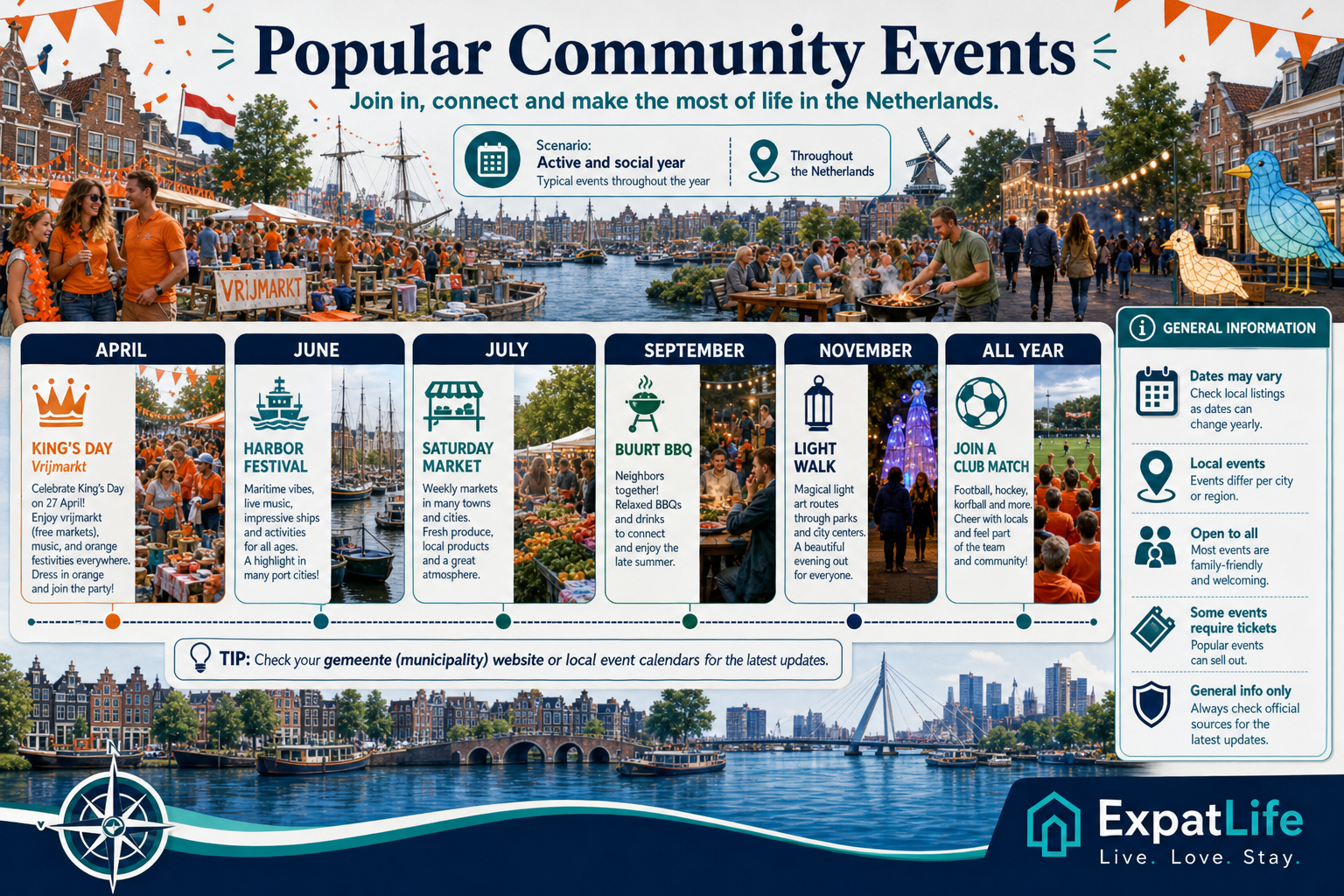
Nationwide street parties, flea markets and orange-themed neighborhood events on 27 April.
City and harbor festivals, light trails and cultural weekends throughout the year.
Weekly markets and seasonal food fairs — easy places to practice Dutch with vendors.
Club matches, running races and national games as social anchors.
Buurt BBQs, clean-up days and building drinks organized by residents.
Expat groups, professional communities, international clubs and city-specific organizations help newcomers orient quickly. They offer housing tips, school advice, peer support and familiar social formats during early culture shock.
Benefits include fast access to people who understand relocation stress. Limitations include staying inside an international bubble, missing local language practice and slower neighborhood integration if expat contact replaces local activities.
A balanced approach works well: use expat networks for practical setup, then add at least one local club, volunteer route or neighborhood activity for long-term roots.
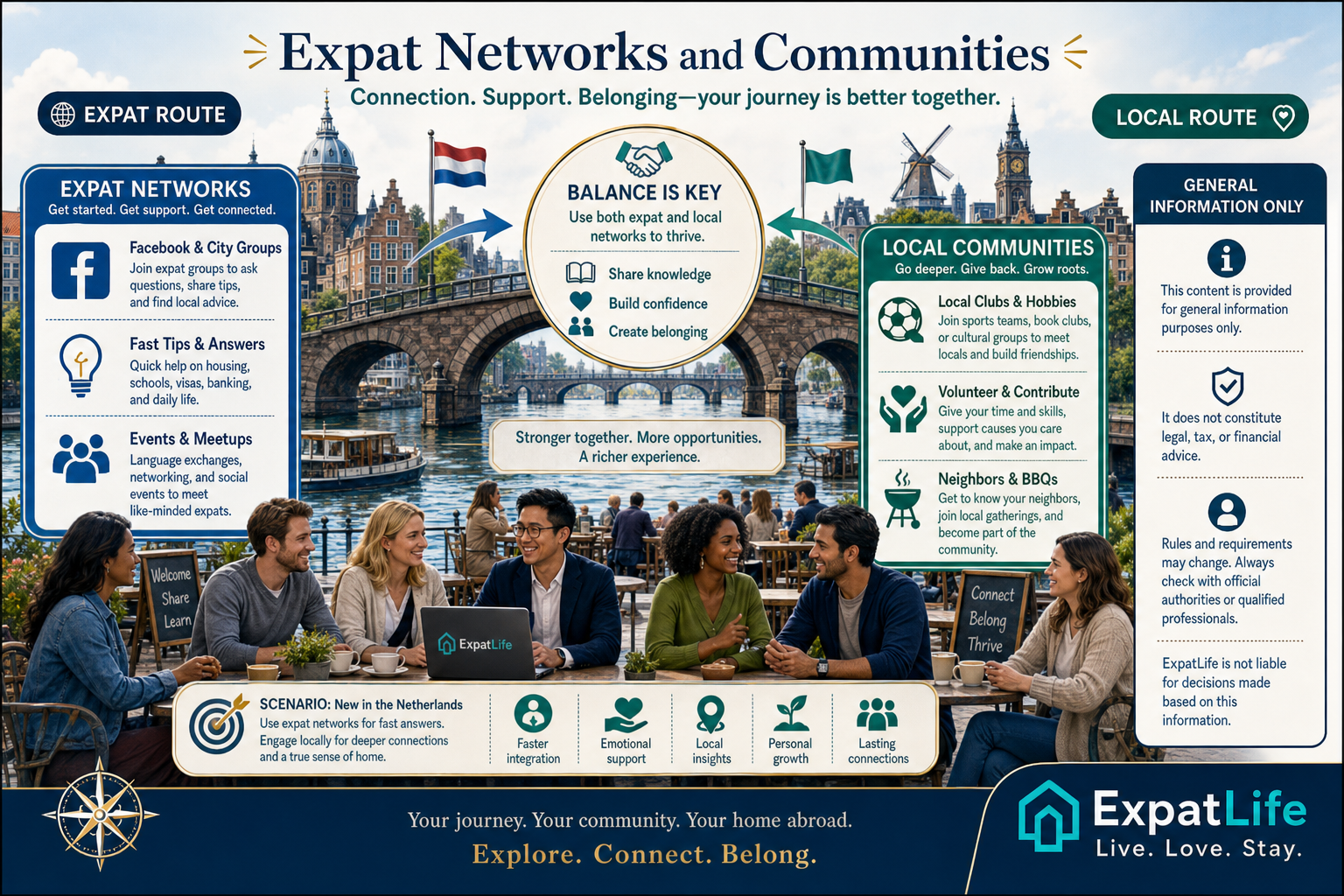
Facebook communities, IN Amsterdam-style hubs and newcomer meetups in major cities.
Industry associations, tech meetups and international chamber events.
Sports, social and cultural clubs serving globally mobile residents.
Rotterdam International Center, The Hague International Centre and similar desks.
Amsterdam
Newcomer desk for registration orientation, housing tips and community events.
Open resourceRotterdam
International newcomer support, events and practical settling-in resources.
Open resourceThe Hague
Support for internationals, families and institutions in the Hague region.
Open resourceUtrecht region
Regional newcomer information and community orientation.
Open resourceFor relocating families, schools, parent groups, children's sports clubs and local activities often become the main social engine. Class WhatsApp groups, parent association events and weekend sports schedules create natural recurring contact.
Municipal family programs, libraries and playgrounds offer additional entry points. International schools build their own communities — useful for globally mobile families, but still worth pairing with a local children's activity.
Explore our family life guides for deeper coverage of schools, childcare and household settling — community participation grows naturally from those routines.
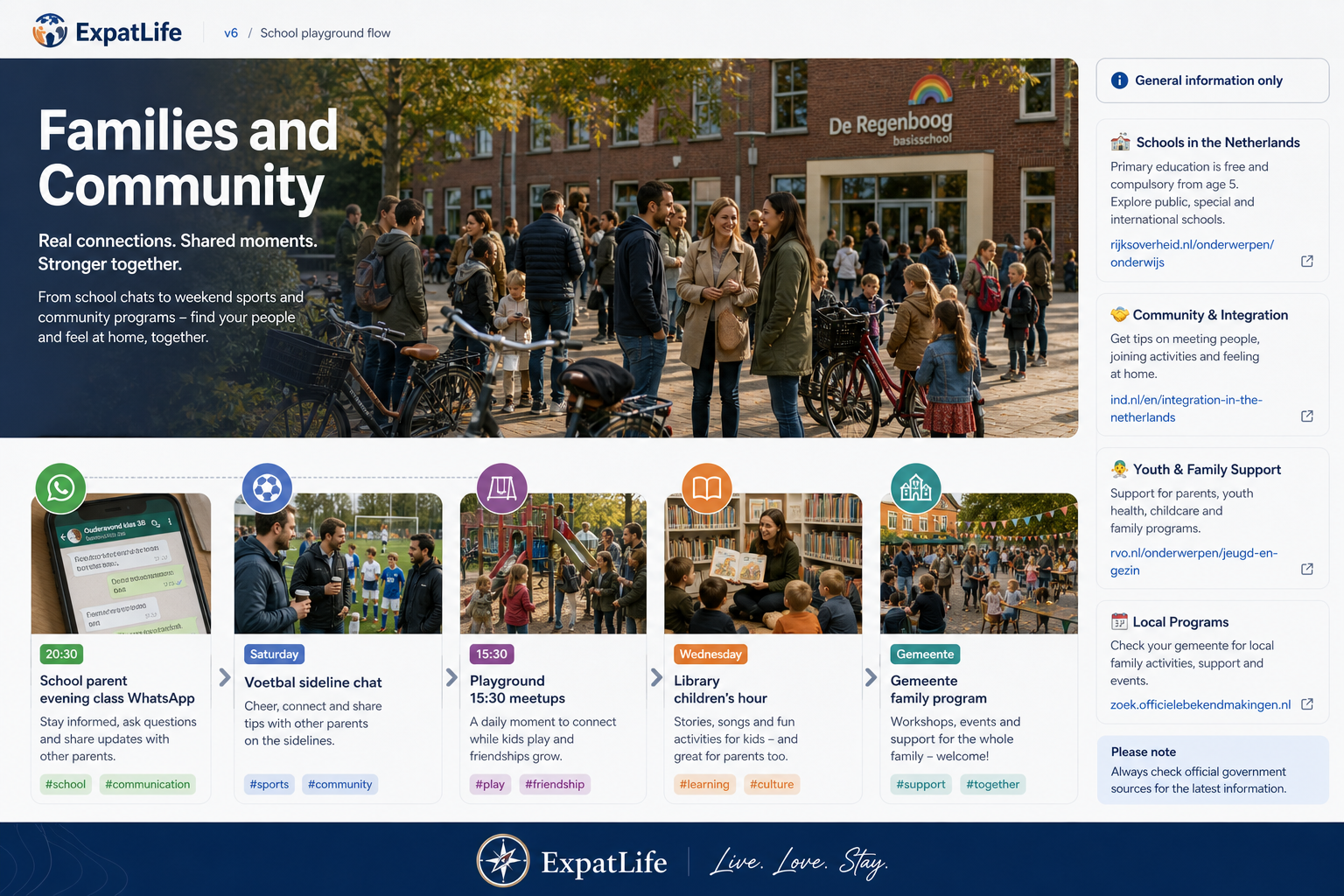
Parent evenings, class apps and school festivals introduce other families quickly.
Class representatives and parent associations organize social events and volunteering.
Children's football, swimming and gymnastics clubs are social hubs for parents too.
Library children's hours, playgrounds and municipal family programs.
Seasonal fairs and neighborhood parties where children meet first, parents follow.
Students often have structured social entry points: university associations, international student networks, housing communities and intro-week events. Dutch student culture includes strong association (dispuut) traditions in many cities.
Housing communities with shared kitchens and common rooms accelerate friendships. Campus sports centers and student unions in cities like Utrecht, Groningen and Leiden run clubs and social committees.
Balance association life with city exploration — local clubs and volunteer routes help students stay connected after graduation or internship moves.
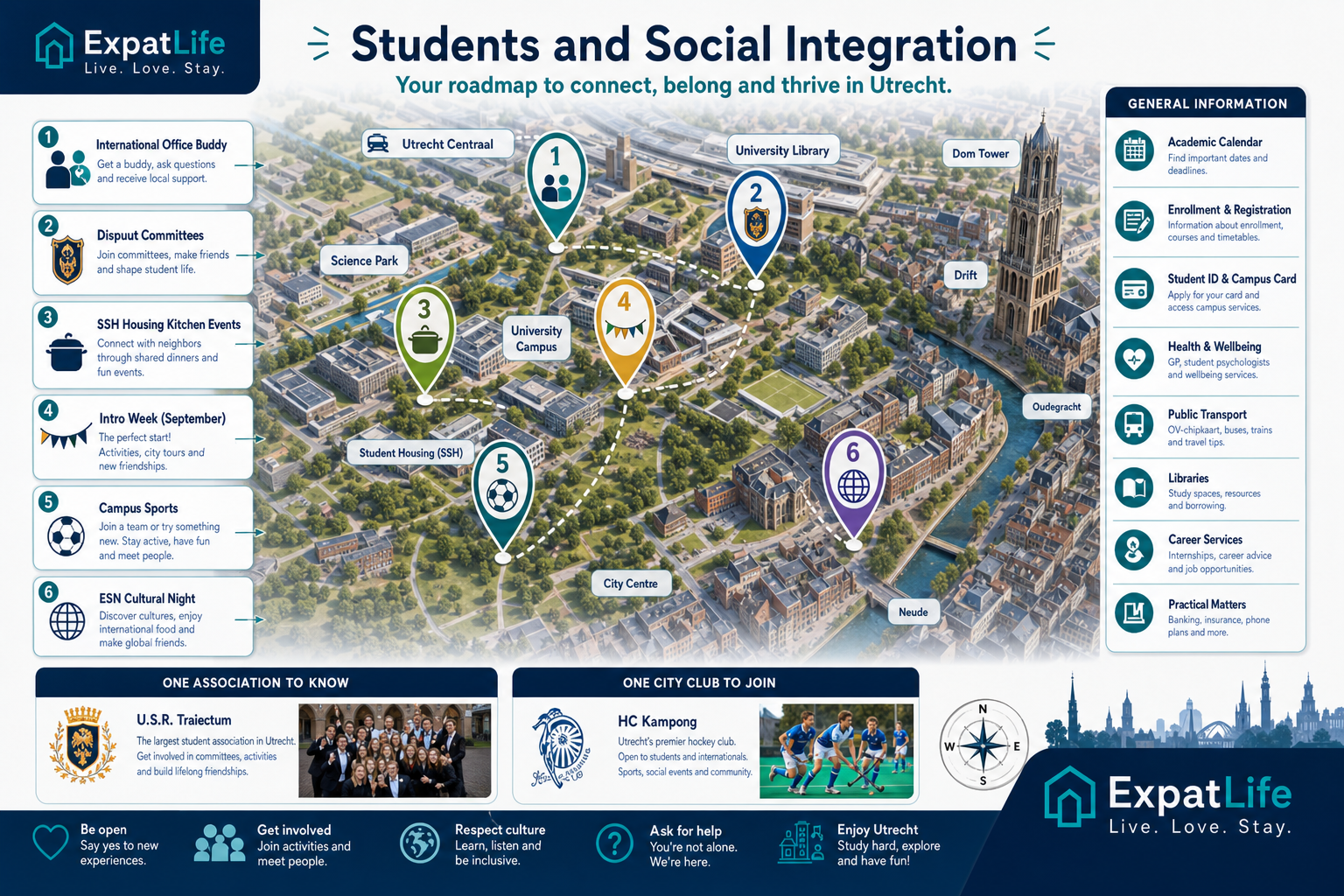
International offices, buddy programs and campus event calendars.
Disputen, committees and sports associations with structured social roles.
Student houses and SSH-style complexes with shared social spaces.
Intro weeks, cultural nights, sports tournaments and city student festivals.
Starter Dutch for campus life, housing communities and local club sign-up conversations.
Open guideDigital communities complement in-person routines but rarely replace them for deep integration. Facebook groups help with housing questions, event discovery and city tips. Meetup lists hobby and language gatherings. LinkedIn supports professional relocation peers.
WhatsApp dominates practical coordination — class parents, sports teams, building groups and street communities. Local forums and Reddit communities offer candid city advice; verify important information on official sources.
Use online tools to find activities, then commit to showing up in person consistently.
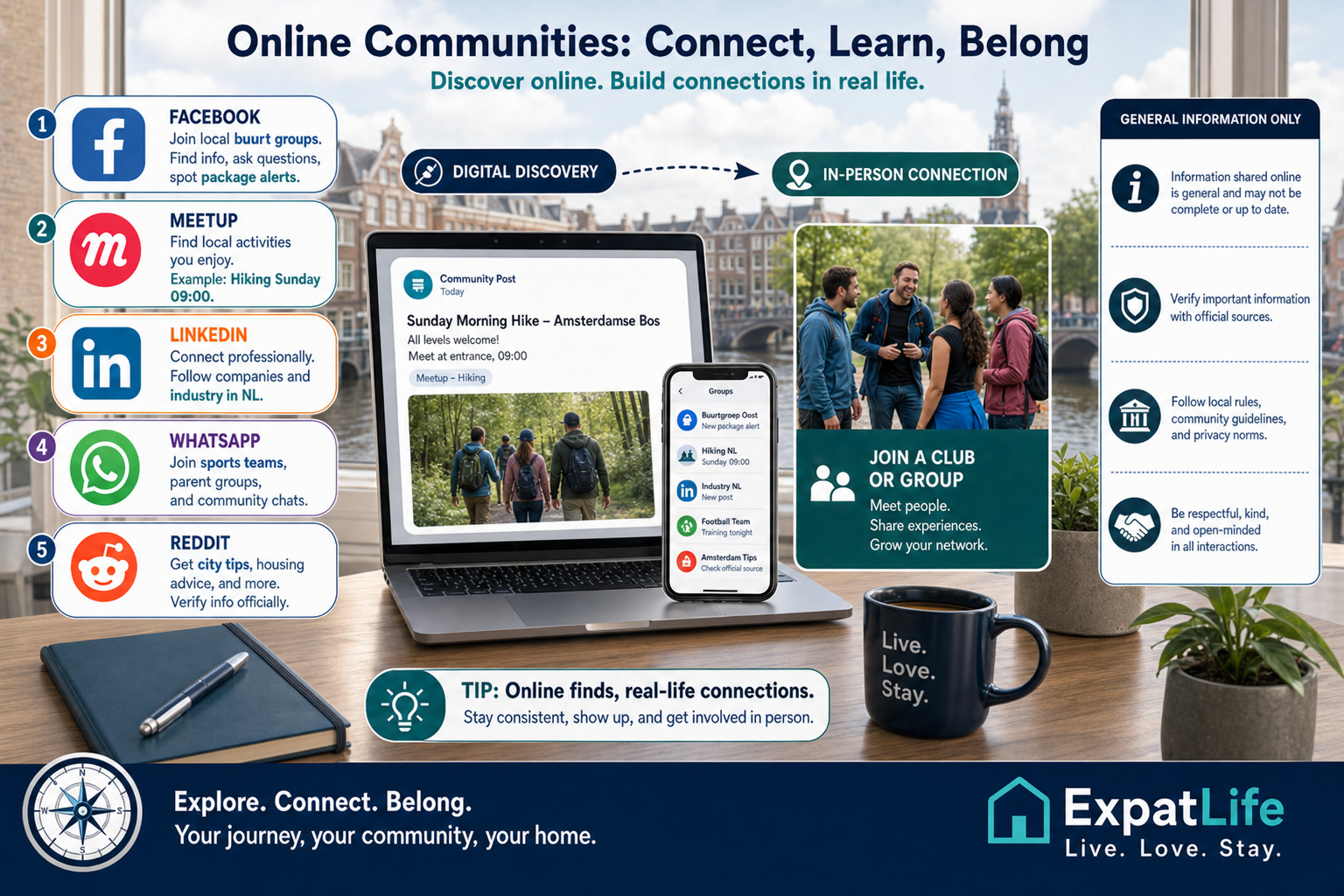
City expat groups, neighborhood forums and hobby communities.
Language cafés, hiking, tech talks and social hobby gatherings.
Industry and relocation professional communities.
Building groups, class parents, sports teams and street chats.
City subreddits, expat forums and municipal comment boards for practical tips.
International population, neighborhood vibe and club culture differ by city — explore city guides for deeper local context.
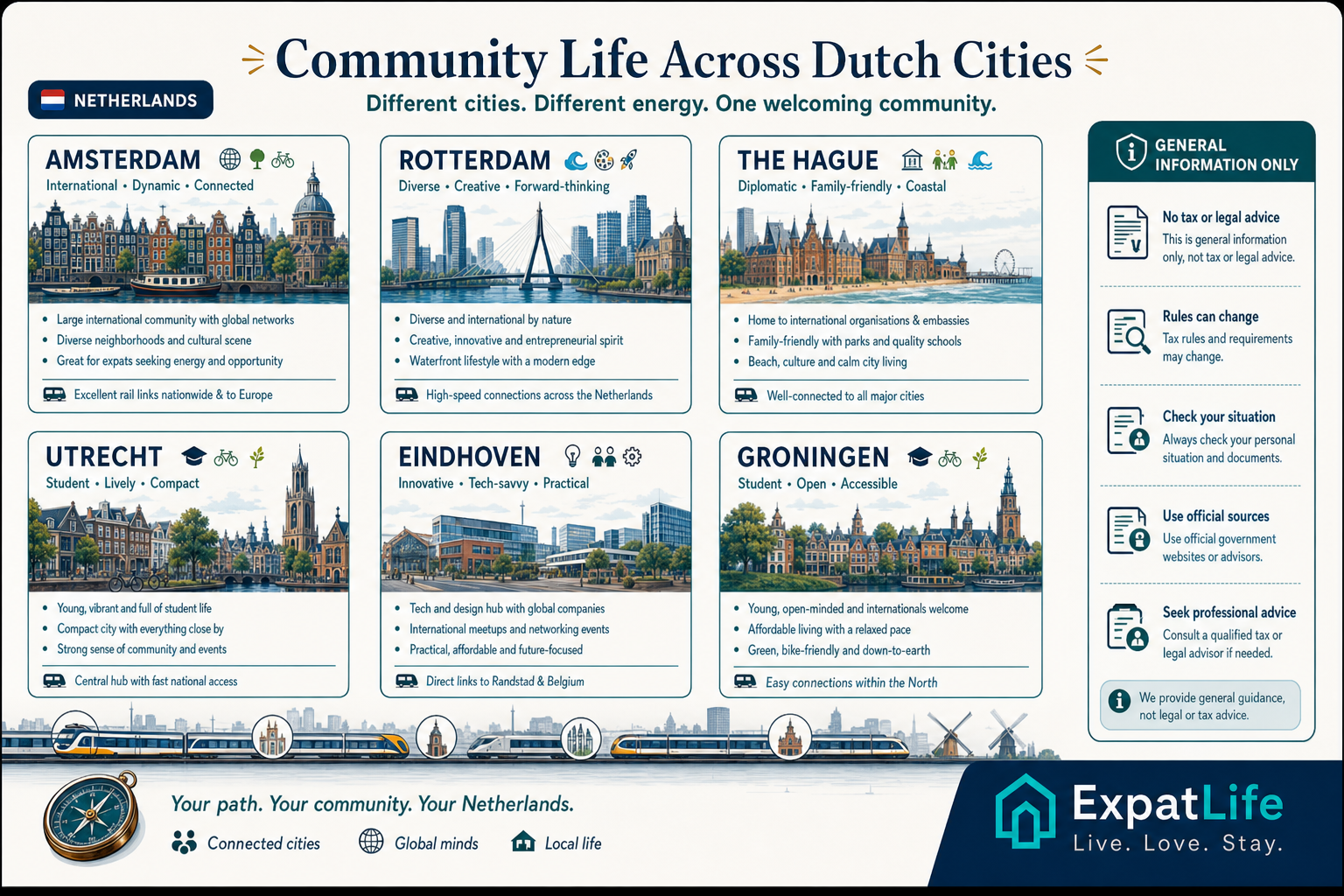
Large international workforce and student population
Dense neighborhoods, busy social calendar, many English-friendly entry points
IN Amsterdam, expat meetups, canal-side clubs, museum and festival culture
Open city guideGrowing international port and creative industries community
Diverse, direct, neighborhood-focused with strong urban energy
Rotterdam International Center, waterfront events, football and running clubs
Open city guideDiplomatic, legal and NGO international community
Family-oriented, international institutions, calmer residential districts
The Hague International Centre, beach clubs, parent networks, cultural festivals
Open city guideLarge student population and Randstad commuters
Compact, walkable, youthful with strong association culture
Student unions, cycling clubs, library programs, canal-side social life
Open city guideTech industry and international talent hub
Practical, innovation-focused, growing expat infrastructure
Tech meetups, international company communities, sports and design events
Open city guideStudent-heavy northern city with research community
Accessible scale, friendly local pace, strong student social life
University associations, cycling culture, affordable club sports, cultural venues
Open city guideIntegration challenges are normal — not a sign that you chose the wrong country. Culture shock, language barriers, slow friendship depth, homesickness and workplace-only social circles are among the most common experiences newcomers report.
Unrealistic expectations — expecting instant best friends or a copy of home social life — can amplify disappointment. Small, consistent steps usually outperform dramatic one-week social sprints.
If isolation persists, combine peer support (expat or professional groups) with one structured local activity and consider municipal integration resources listed on official websites.
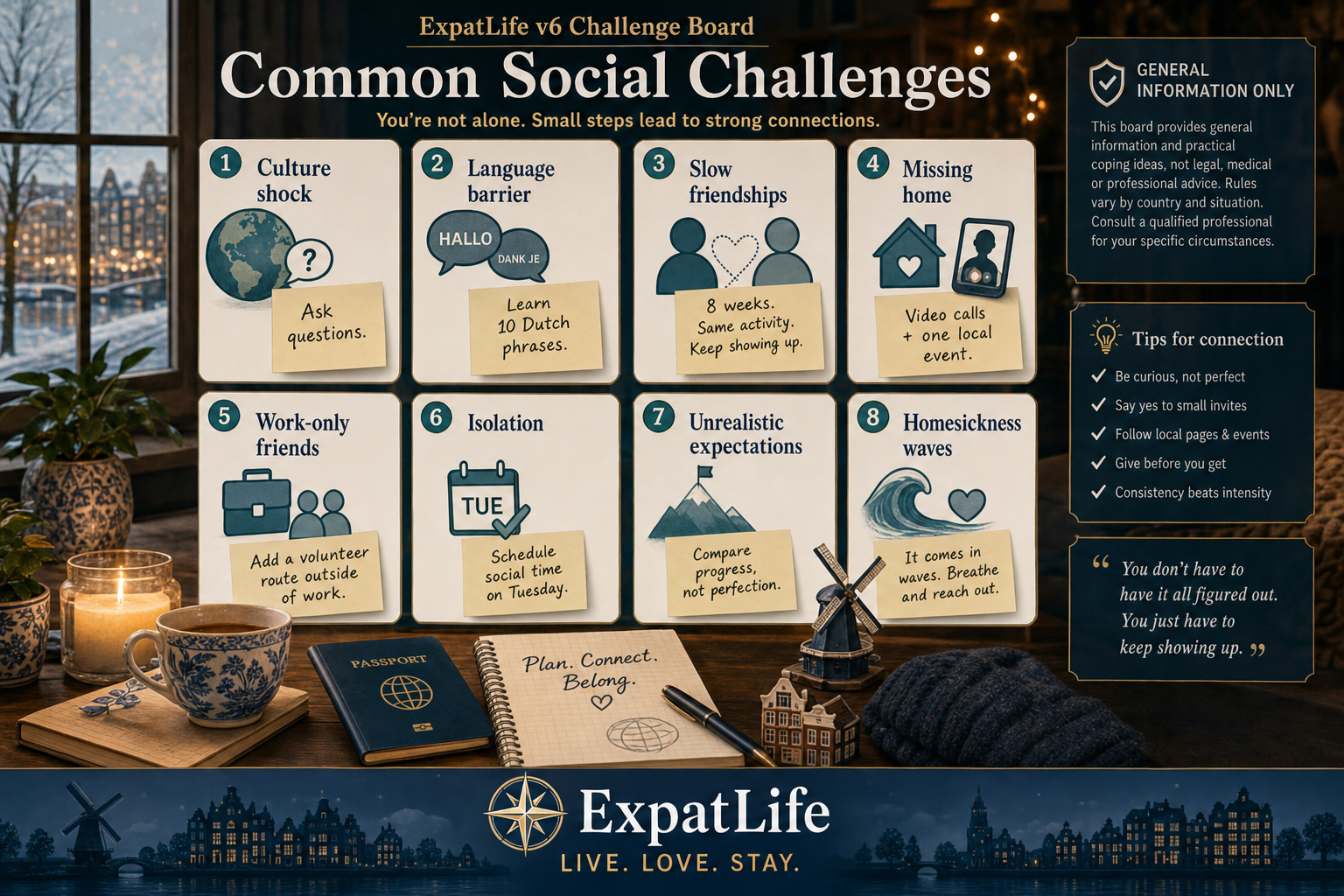
Directness, planning norms and social pacing may feel unfamiliar in the first months.
Limited Dutch can shrink conversation depth even when English works for basics.
Activity partners may take months to become close friends — patience helps.
Seasonal events and family distance can intensify homesickness — stay connected while building local roots.
Starting from zero contacts is normal — one club expands your network over time.
Office friends help but may disappear if you change jobs — diversify outside work.
Remote work and winter darkness can reduce spontaneous contact — schedule social time.
Comparing every interaction to home or movie-style instant friendship slows progress.
Challenge
Direct feedback and reserved first meetings can feel cold early on.
Try: Join a recurring activity; ask clarifying questions instead of assuming intent.
Challenge
Small talk in Dutch may stall even when English works at work.
Try: Use library language cafés and learn ten practical phrases for neighbors and shops.
Challenge
Teammates may stay activity partners for months before inviting you outside the club.
Try: Stay consistent 8+ weeks; accept small invitations when they appear.
Challenge
Remote work and dark winter evenings reduce spontaneous contact.
Try: Book one fixed social slot weekly — club, volunteer shift or neighborhood walk.
Use this checklist after your first month — consistency matters more than checking every box in week one.
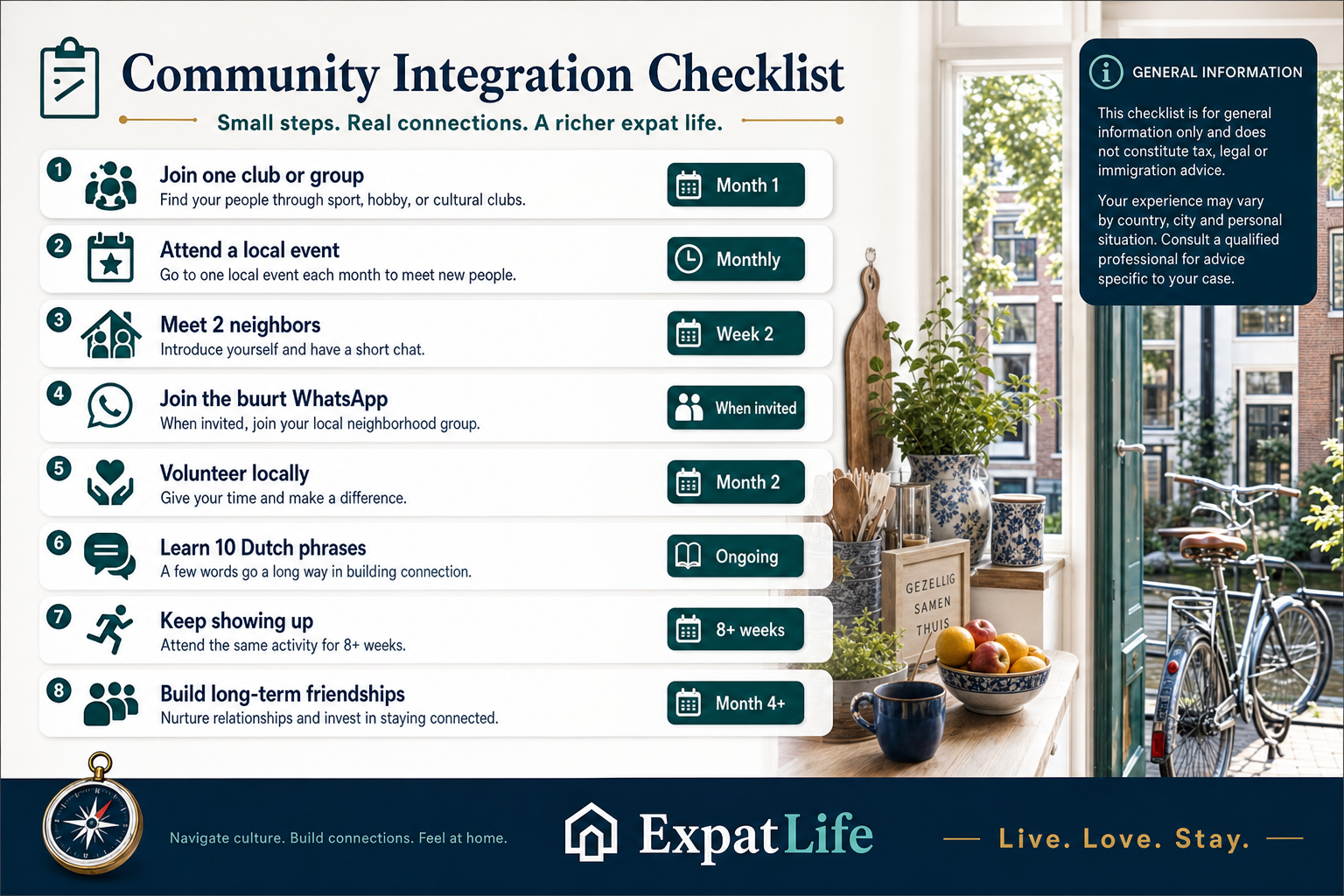
Month 1
Pick a weekly activity you can attend at least twice a month for three months.
Monthly
Market, King's Day, library program or buurt gathering — low pressure, local contact.
Week 1–2
Brief hello, intro note or building drinks when offered.
Month 1
Buurt WhatsApp, sports team chat or class parent group when invited.
Month 2
Book the same weekly shift at food bank, shelter or library program.
Ongoing
Ten phrases for greetings, shops and neighbor requests — expand from there.
8+ weeks
Same club or volunteer slot — familiarity is when trust builds.
Month 4+
Accept invitations outside your activity; diversify beyond one circle.
Balanced explanations for common assumptions newcomers hear about Dutch social life.
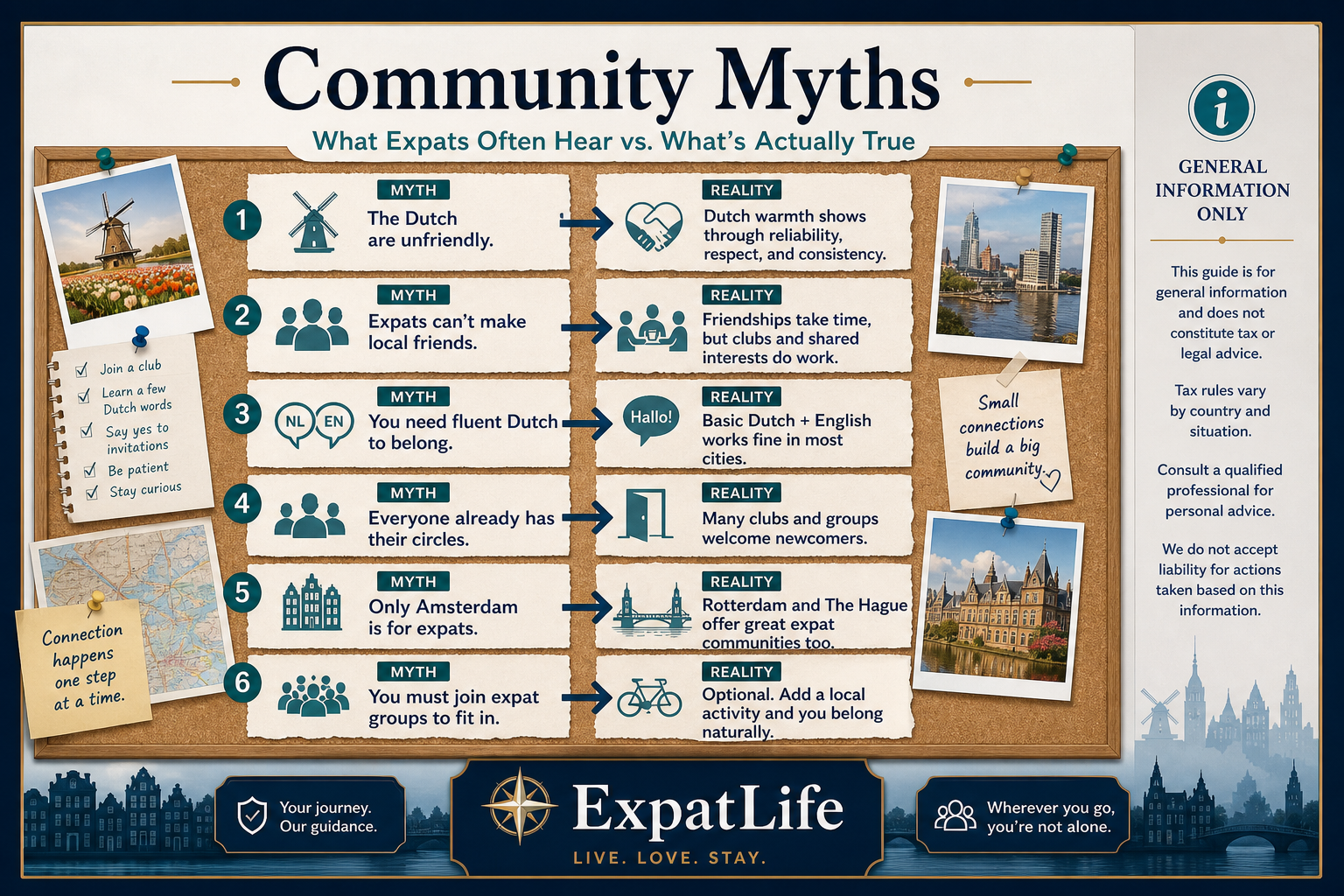
Myth
Many newcomers experience direct communication and reserved first meetings. Warmth often appears through reliability, invitations after repeated contact and practical help — not always through instant small talk.
Myth
Many expats build close friendships with Dutch neighbors, club teammates and colleagues. Activity-based routes and language practice improve odds over time.
Myth
Fluent Dutch helps depth, especially outside international workplaces. Basic Dutch plus consistent club attendance works for many newcomers in larger cities.
Myth
People join clubs, move cities and change jobs throughout life. New members are common in associations, parent groups and volunteer teams.
Myth
Rotterdam, The Hague, Utrecht, Eindhoven and university cities all have international networks, newcomer desks and hobby communities.
Myth
Expat groups are optional tools for orientation. Long-term integration often benefits from at least one local activity alongside international contact.
Quick answers for orientation — pair with official sources and your local gemeente for program details.
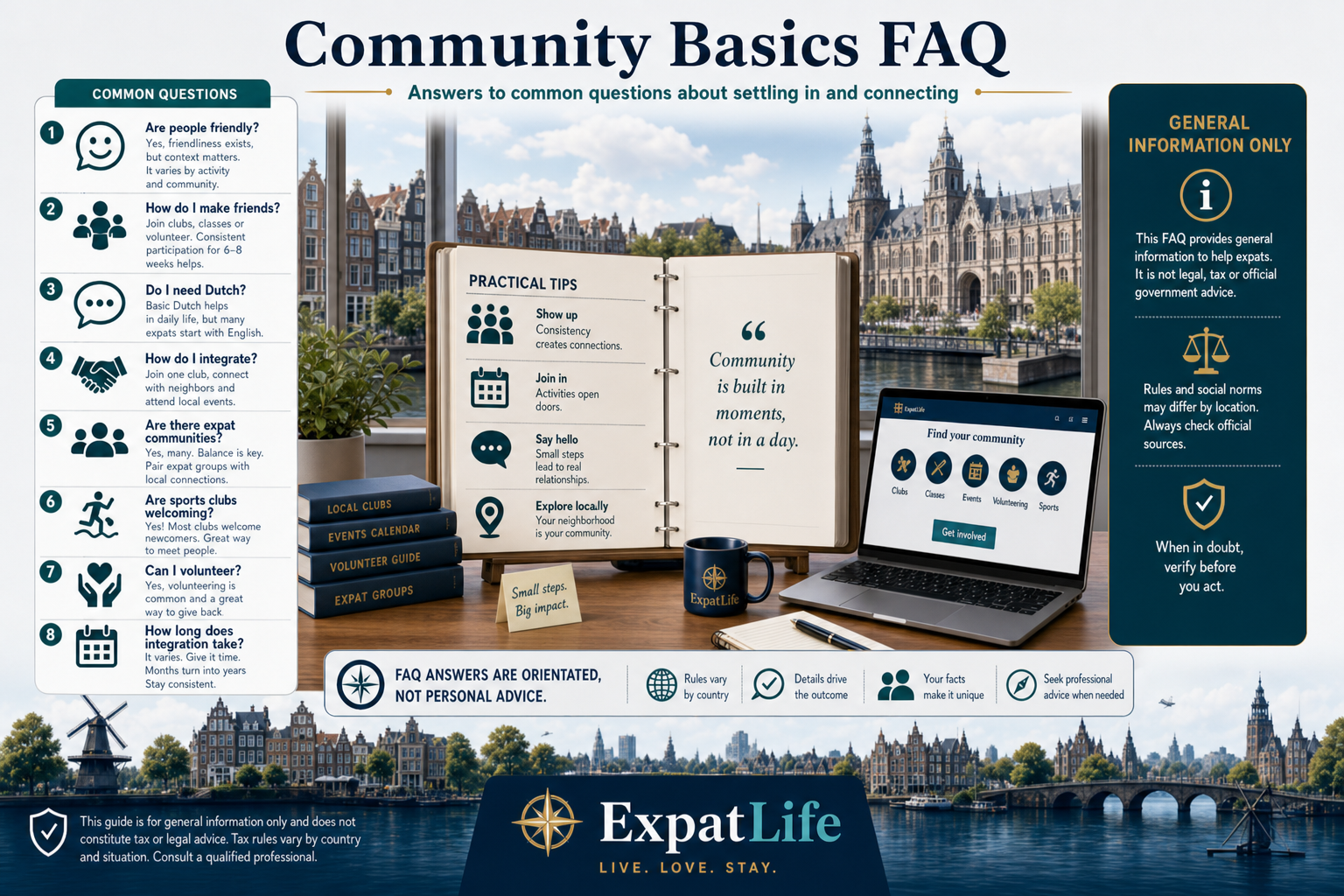
Friendliness varies by person, neighborhood and context. Many Dutch people are reserved in first meetings but warm and reliable once relationships develop through shared activities. Direct communication is common and is often practical rather than personal.
The most cited practical routes are sports clubs, hobby associations, language classes, volunteering and neighborhood activities. Choose one or two channels, attend consistently for several months and let familiarity build naturally.
English works in many cities for starting out, especially in international workplaces and larger urban areas. Learning basic Dutch helps with neighbors, clubs, municipal services and deeper friendships. Fluency is not required to begin integrating.
Combine registration and housing setup with one club or volunteer commitment, neighbor contact, basic Dutch study and regular local events. Balance expat orientation groups with at least one local activity for long-term roots.
Major cities have active expat Facebook groups, newcomer centers, international clubs and professional networks. They are useful for early orientation — pairing them with local activities supports deeper integration.
Most clubs charge a membership fee, run scheduled training or matches and include social events. Many offer trial sessions or beginner groups. Ask about English-friendly teams if language is a concern.
Volunteering is a respected part of community life. Libraries, food banks, shelters, cultural organizations and environmental projects welcome regular volunteers. Search municipal listings and local NGO portals for openings.
Timelines vary widely — from a few months for activity partners to several years for deep local roots. Consistency, language progress and neighborhood contact usually matter more than a single intensive social month.
Community resources, integration programs and local activities vary by municipality. Always verify current information with official sources.
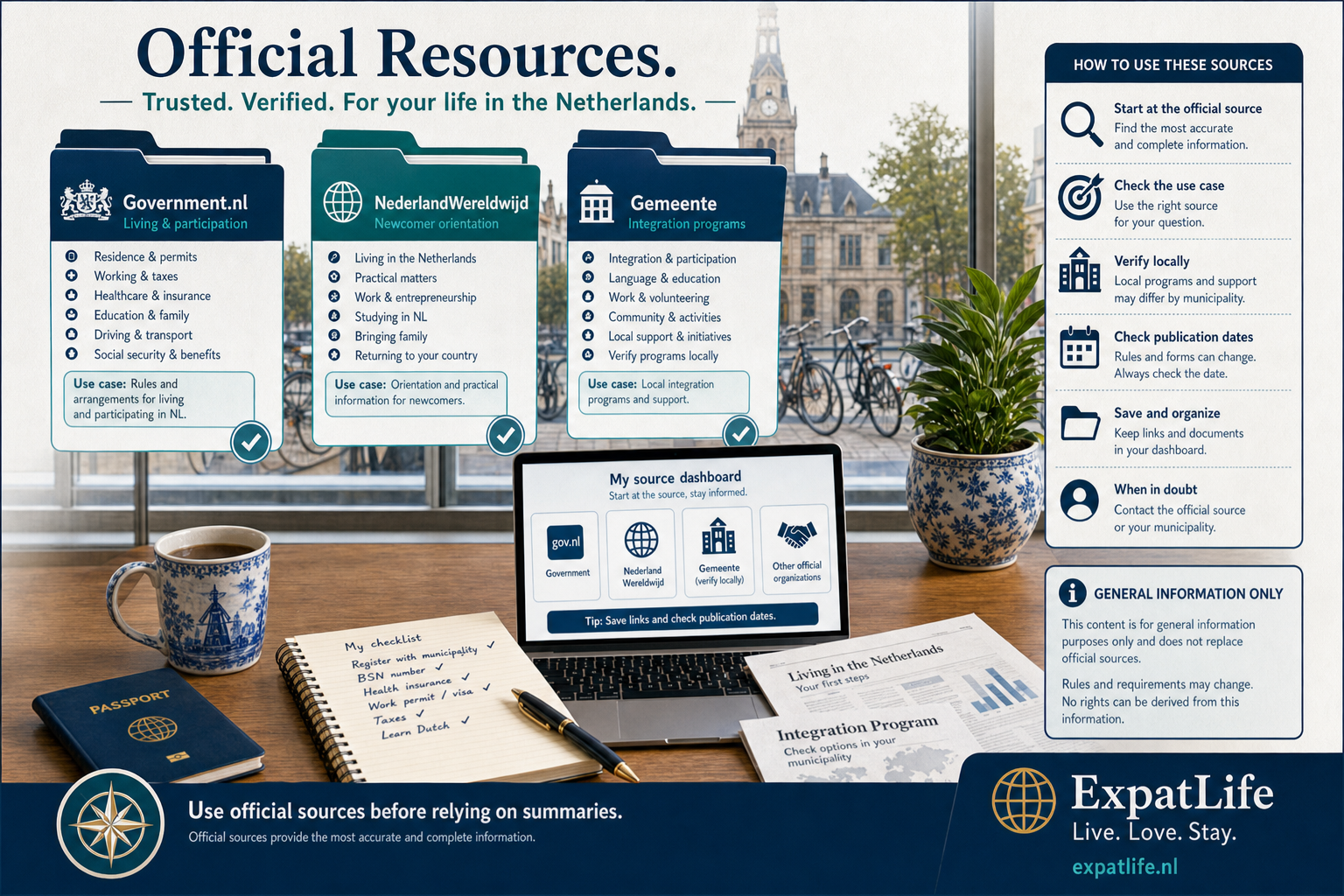
Community resources, integration programs and local activities vary by municipality and change over time. Always verify current information with official government and municipal sources. This guide provides general orientation only.
Official Dutch government information on living, working and community participation in the Netherlands.
Open official sourceGovernment portal with practical information for newcomers and Dutch nationals abroad.
Open official sourceYour gemeente website lists local integration programs, volunteer opportunities and community events. Examples include Amsterdam, Rotterdam, The Hague and Utrecht.
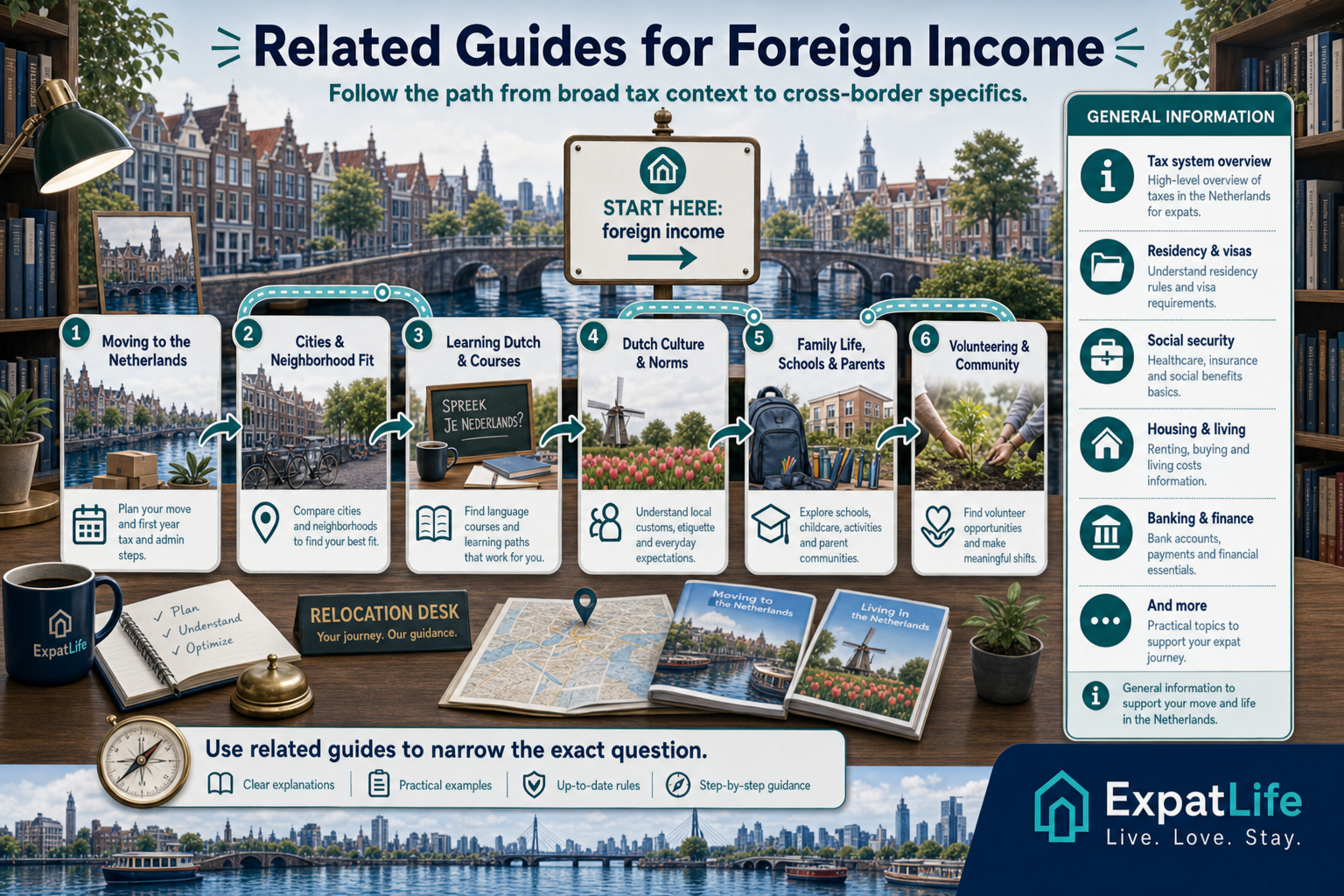
Open official sourceContinue from community basics into relocation, cities, language, culture and family settling guides.
Explore next
Move from community orientation into culture, language, family life, city choice and volunteering paths.