
Shop default
Usually debit
Credit is secondary at many tills
Netherlands · Money · Banking
How credit cards fit Dutch payment culture for expats: when they are useful, what to expect on availability and acceptance, and how fees and interest usually work — without ranking issuers.
General orientation only — not financial advice. Issuers, merchants and networks set their own rules. Fees, interest and acceptance change; confirm with your provider and the merchant before you rely on one card. This page does not rank cards or promise approvals.
Quick answer
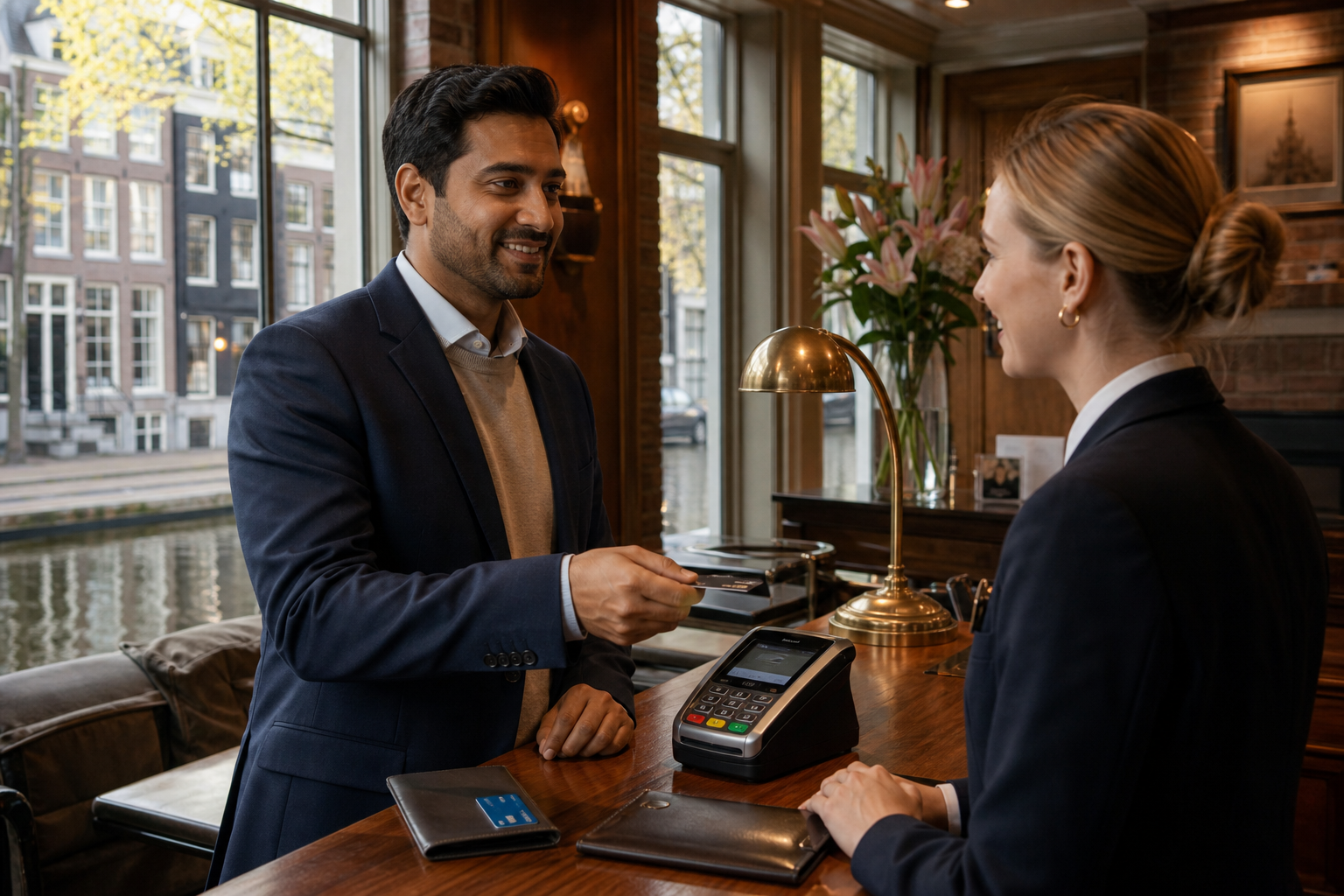
In the Netherlands, weekly life at shops is usually debit-first. A credit card can still be useful — especially for hotel deposits, some rentals, travel bookings and certain online holds — but it is not the default till language the way it is in many credit-first countries.
This page is the credit-product orientation guide for expats: how credit fits Dutch payment culture, availability realities, when it helps, fees and interest orientation, and credit vs debit for everyday spend. Debit and PIN culture live on Debit cards. Everyday cash-vs-card till culture lives on Cash vs card. iDEAL and SEPA rails live on How payments work.
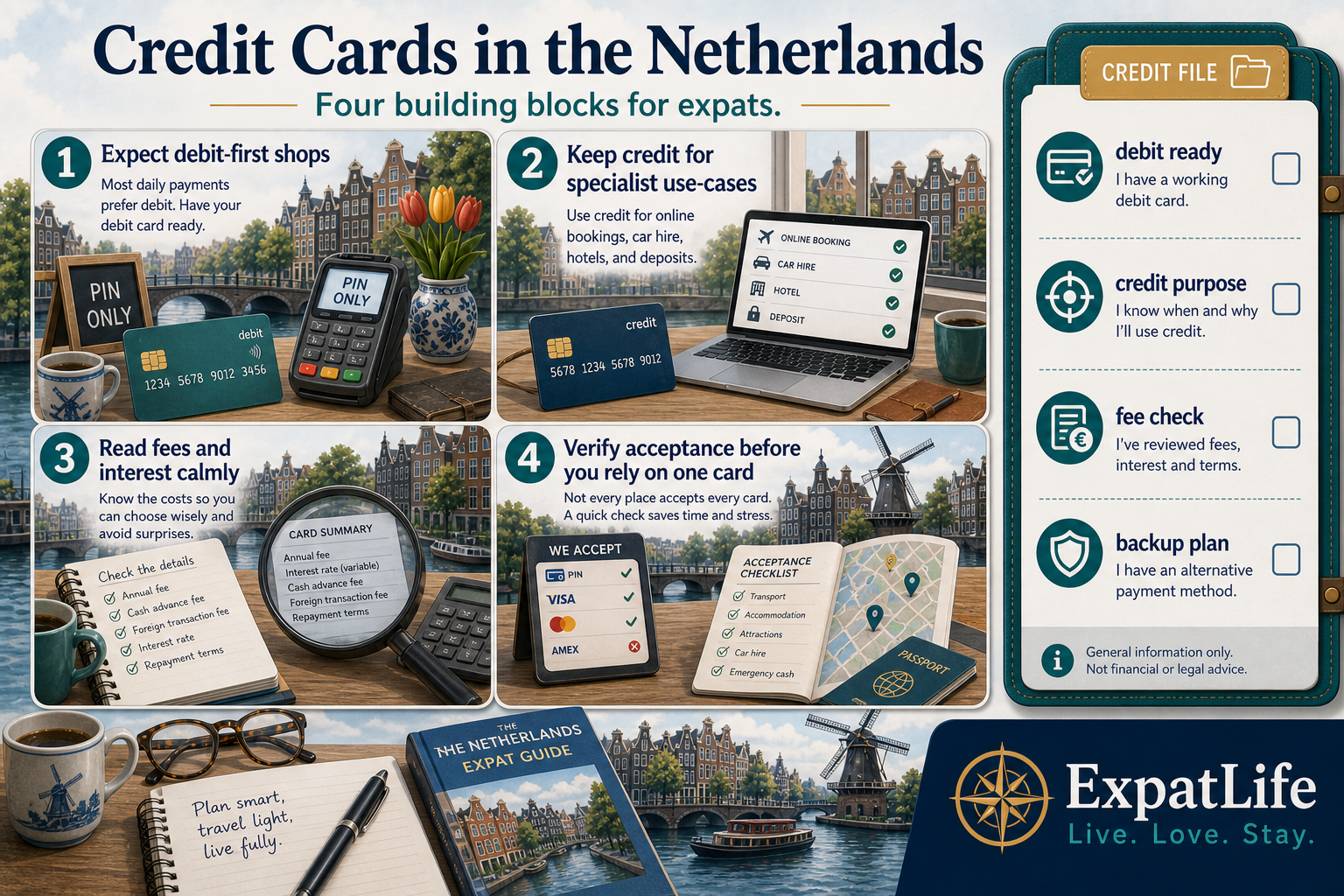
Credit readiness file — keep these together
Examples
| Situation | How it works here | First step |
|---|---|---|
| Weekly supermarket run | Dutch debit tap or chip + PIN is the local default — credit is secondary | Confirm debit works; do not force credit at every till |
| Hotel weekend with deposit hold | Reception often prefers a credit card for the hold | Ask what they accept before arrival; keep debit for other spends |
| First months after landing | Foreign credit can bridge; residents usually prioritise Dutch debit setup | Start Open a bank account, then decide if Dutch credit is needed |
Snapshot
Six cards cover how credit fits Dutch payment culture. Deeper sections expand each theme without ranking issuers.

Shop default
Usually debit
Credit is secondary at many tills
Credit shines
Holds & travel
Hotels, rentals, some deposits
Availability
Varies
Issuers decide — not guaranteed
Fees
Verify 2026
Indicative only — check issuer pages
How credit fits Dutch payment culture: availability, useful moments, fees orientation, and credit vs debit for everyday spend.
Debit runs weekly life; credit is a specialist tool for holds and some travel — not a universal shop language.
Foreign cards can bridge early weeks; Dutch credit products depend on issuer rules, residency and income signals.
Annual fees, revolving interest, FX markups and cash advances — orientation only, verify current terms.
PIN/debit culture → Debit cards. Cash pockets → Cash vs card. Rails → How payments work.
Need the everyday account first? Open a bank account — then return here if you still need credit for holds.
Culture fit
Dutch payment culture grew around debit at the till. Locals “pin” for groceries and many cafés. Credit cards are familiar — especially for travel, hotels and some online contexts — but expecting every shop to treat credit as the default (as in some other countries) creates friction. Fit credit into a debit-first wallet, not the other way around.

Culture-fit habits
If you grew up swiping credit for weekly shops, Dutch tills can feel upside down. Plan for debit capability first.
Think hotel desks, car rentals, some deposits and travel bookings — not the supermarket as the main use-case.
This page does not award “best credit card” labels. Compare products on bank sites after you shortlist on Best banks.
PIN culture → Debit cards. Markets and cash floats → Cash vs card. iDEAL → How payments work.
Availability
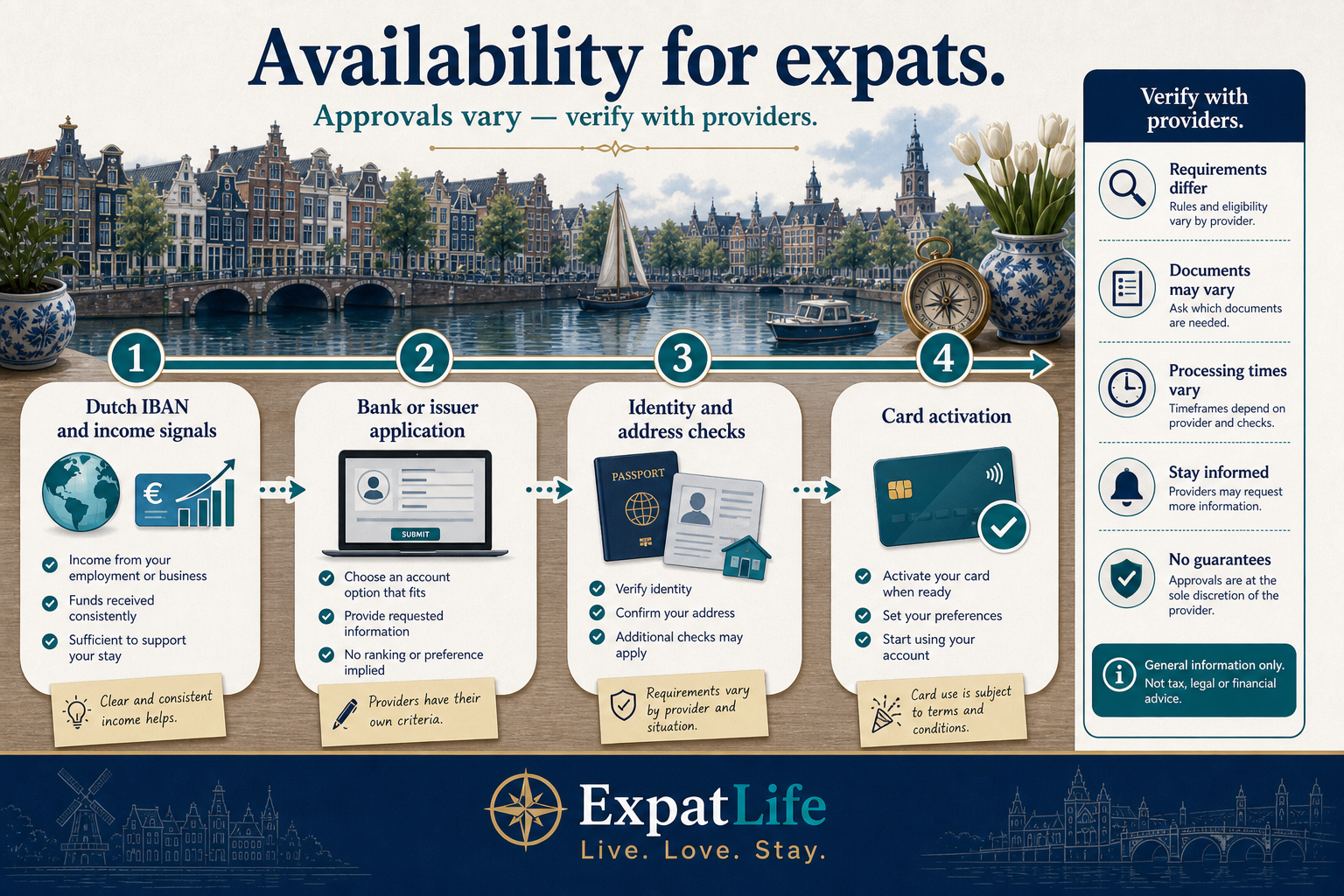
Credit cards are available in the Netherlands, but access is not automatic. Banks and issuers check identity, address, income and other risk signals. New arrivals often bridge with a foreign credit card while setting up a Dutch everyday account and debit pinpas. Approvals are never guaranteed — treat applications as issuer decisions, not entitlements.
What expats usually need to know
Tourists and short visitors usually rely on cards from home. Residents deciding to stay typically set up Dutch debit first, then ask whether they need a Dutch credit product.
Identity documents, address registration, income evidence and existing banking relationship are common themes — exact lists live on each issuer’s application flow.
Opening an everyday account (for a pinpas) is a different journey from applying for revolving credit. Start with Open a bank account when you need debit.
We do not rank Visa vs Mastercard issuers or publish award-style tables. Use official product pages after you know why you need credit.
Availability 1
Get a working Dutch debit path (or a clear foreign bridge) before chasing credit for weekly shops.
Availability 2
Holds, travel, deposits — if you cannot name a use-case, you may not need credit yet.
Availability 3
Check eligibility, fees and interest on the provider’s site — not on ranking blogs alone.
Availability 4
If delayed or declined, review documents and ask the issuer — do not assume a second brand will auto-approve.
When useful
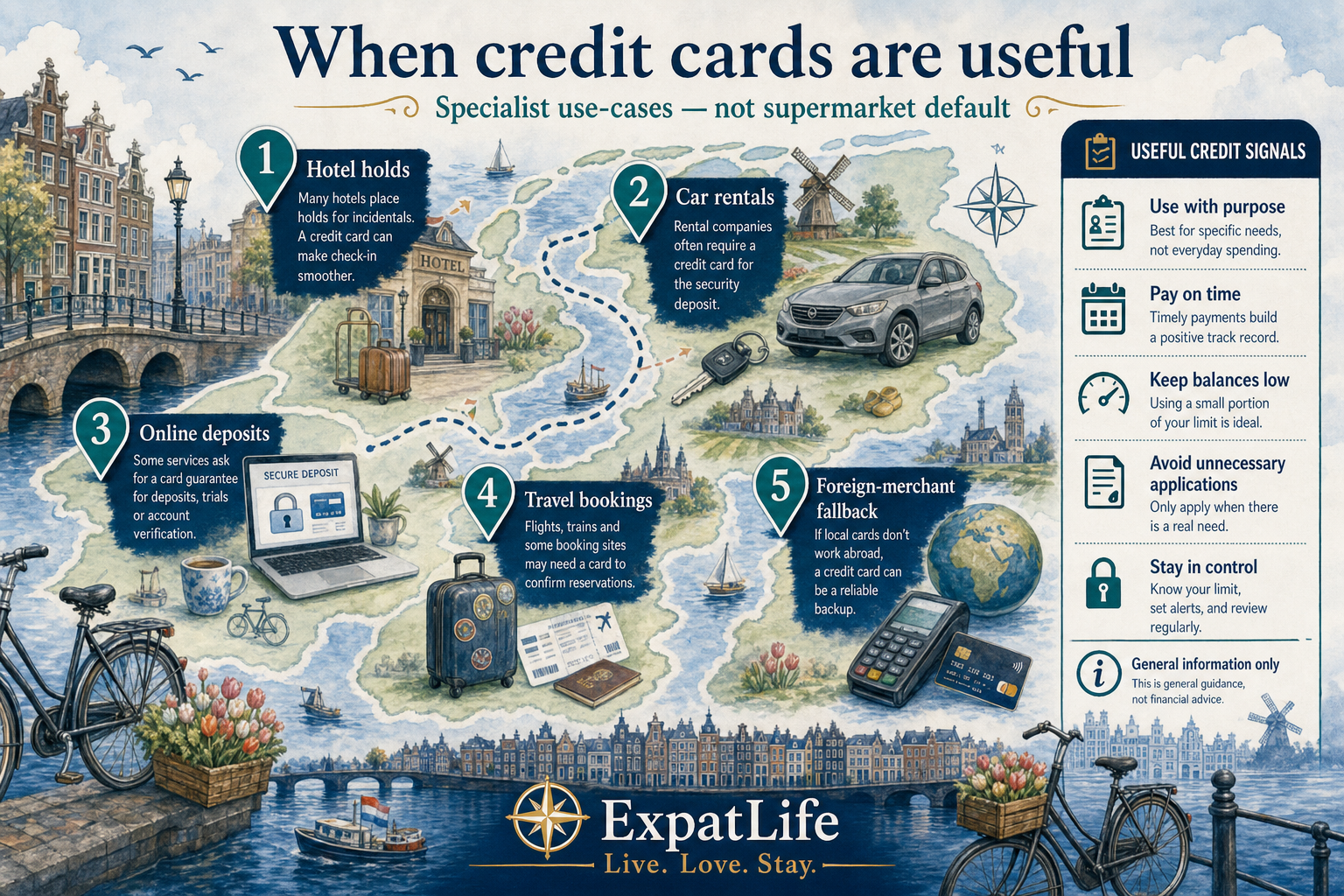
Credit earns its place when a merchant wants a hold, a booking platform expects a credit product, or you need a travel fallback. It is less useful as a replacement for Dutch debit at groceries and pharmacies. Match the tool to the job.
Where credit often helps
Reception may place a temporary hold. Credit is often preferred; debit rules vary. Ask before you arrive.
Airlines, hotels and car rentals sometimes expect credit. Keep debit for local shops on the same trip.
Some platforms prefer credit even if you live debit-first offline. That does not make credit the Dutch supermarket default.
Forcing credit at every café to “build history” against Dutch debit culture usually creates declines — not smoother life.
| Setting | Debit | Credit | Practical tip |
|---|---|---|---|
| Supermarket groceries | Smooth default for most shops | May work, but not the cultural default | Lead with debit |
| Hotel check-in hold | Sometimes accepted — rules vary | Often preferred for the hold | Ask reception in advance |
| Street market stall | Sometimes; often cash | Uncommon | See Cash vs card |
| Dutch webshop checkout | Often via iDEAL bank approval | Sometimes offered; not always primary | See How payments work |
Fees
Credit products can include annual fees, interest if you carry a balance, foreign-exchange markups and expensive cash advances. Figures below are indicative orientation for planning conversations in 2026 — not live tariffs and not personal advice. Always verify current terms on the issuer’s official pages before you apply or spend.

What to verify with issuers
Many consumer cards sit from €0 on simple products up to tens of euros per year on packaged cards — verify the exact product page. Not a ranking.
Revolving APRs are set by the issuer and can be meaningful. If you plan to pay in full each month, still read the interest clause for missed payments.
Spending in other currencies or abroad can add markups. Compare with debit FX rules and specialist transfer tools when relevant.
Withdrawing cash on credit is often costly (fees + interest timing). Prefer debit ATMs for cash floats — see Debit cards and Cash vs card.
| Setting | Debit | Credit | Practical tip |
|---|---|---|---|
| Annual card fee | Often bundled in account package | €0–tens/year indicative — verify 2026 tariff | Read the product PDF / site table |
| Paying balance in full | N/A (account balance) | Usually avoids revolving interest — confirm terms | Set calendar reminders |
| Carrying a balance | Overdraft rules differ by bank | Interest can apply — verify APR | Do not assume “grace always” |
| Cash advance | ATM from debit is the usual cash path | Often expensive — avoid as habit | Use debit ATM + modest float |
Vs debit
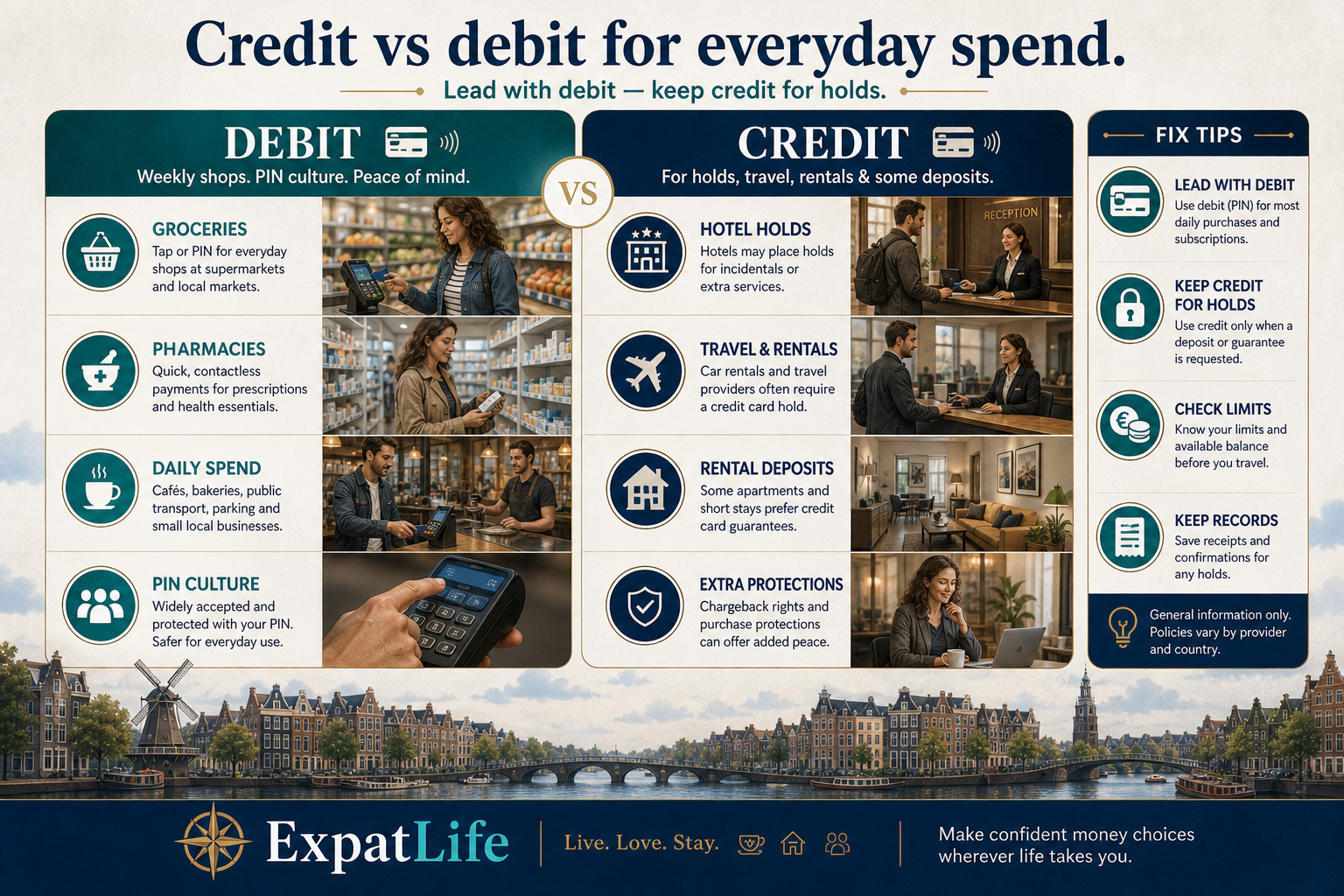
For weekly Dutch life, debit usually wins on cultural fit: pinpas + PIN or tap. Credit wins for many deposit holds and some travel merchants. Build your wallet around that split instead of forcing one card to do every job.
| Setting | Debit | Credit | Practical tip |
|---|---|---|---|
| Weekly groceries | Local default — pin / tap | Secondary; may be declined or awkward | Lead with debit |
| Hotel / rental deposit | Sometimes OK — ask | Often preferred for holds | Confirm before arrival |
| Building everyday habits | Matches Dutch till culture | Do not force credit to “feel normal” | Change the habit, not the country |
| Online Dutch billers | Often iDEAL via bank app | Sometimes offered | Open How payments work |
| Cash float | ATM withdrawals | Cash advance often costly | See Debit cards / Cash vs card |
Acceptance
Dutch merchants choose which networks and card types they accept. A credit logo on your plastic is not a promise that every supermarket, café or stall will take it. Plan a debit backup for everyday shops and ask hotels about holds before you travel.

Acceptance habits
For hotels and car rentals, confirm hold rules by email or phone. Surprises at the desk are stressful.
Carry a working debit option (Dutch pinpas or accepted foreign debit) plus a small cash float for markets.
Visa or Mastercard branding helps routing — merchants and terminals still decide.
Use bank apps to freeze cards, watch for phishing, and verify unexpected holds — see Banking safety.
Situations
Same country, different first moves depending on whether you are bridging, settling, or booking a hold-heavy weekend.

Examples
| Situation | How it works here | First step |
|---|---|---|
| Weekend tourist | Foreign credit + debit backup + small cash float; test a purchase on day one | Do not rely on credit alone in shops — see also Cash vs card |
| New arrival, no Dutch cards yet | Bridge with foreign credit/debit while Open a bank account runs; prioritise debit for weekly life | Write whether you truly need Dutch credit after debit works |
| Resident with Dutch debit, considering credit | Name the use-case (holds/travel), read fees, apply only if needed | Verify issuer eligibility and tariff pages |
| Hotel stay with deposit hold | Confirm credit preference; keep debit for restaurants and groceries | Ask reception what card types they accept for holds |
Avoid
These patterns create avoidable credit friction — calm backups beat awkward declines.
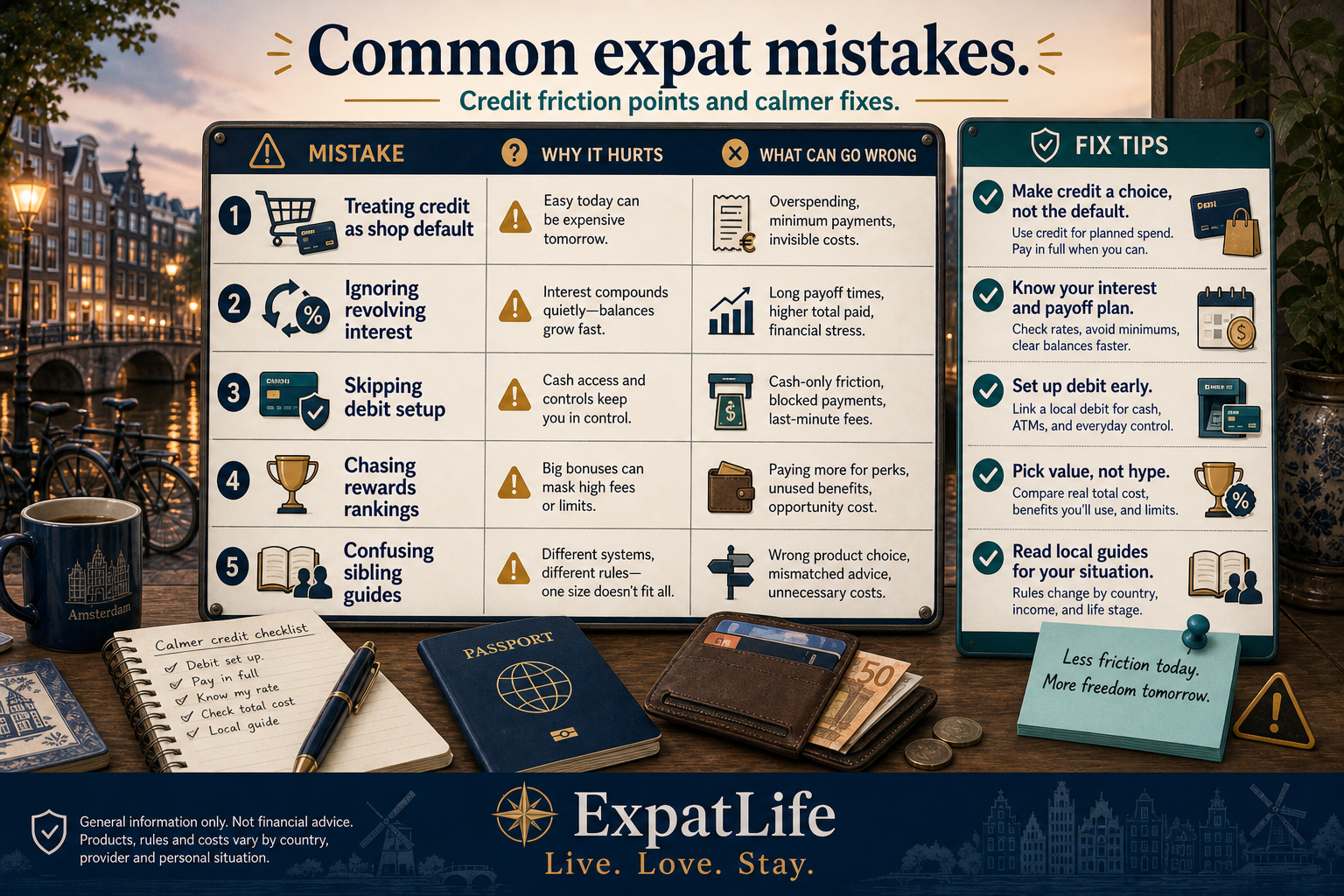
Many everyday shops are debit-led. Credit helps in holds and travel contexts, not as a universal till language.
Fix: Lead with debit capability plus a small cash float.
Carrying a balance can become expensive quickly if you assume interest is negligible.
Fix: Read the issuer APR and repayment terms before you spend.
Foreign credit can bridge weeks, but residents feel friction without a local debit path.
Fix: Start Open a bank account early if you are staying.
Award-style lists go stale and are not this site’s job.
Fix: Match a clear use-case to an official product page after shortlisting banks.
Cash advances are often costly compared with debit ATM withdrawals.
Fix: Prefer debit ATMs and Cash vs card habits for modest floats.
PIN culture, cash pockets and iDEAL rails are separate pages.
Fix: Use Debit cards, Cash vs card and How payments work for those deep-dives.
Ready for credit
Work through this list before you apply for or rely on a credit card in Dutch daily life.
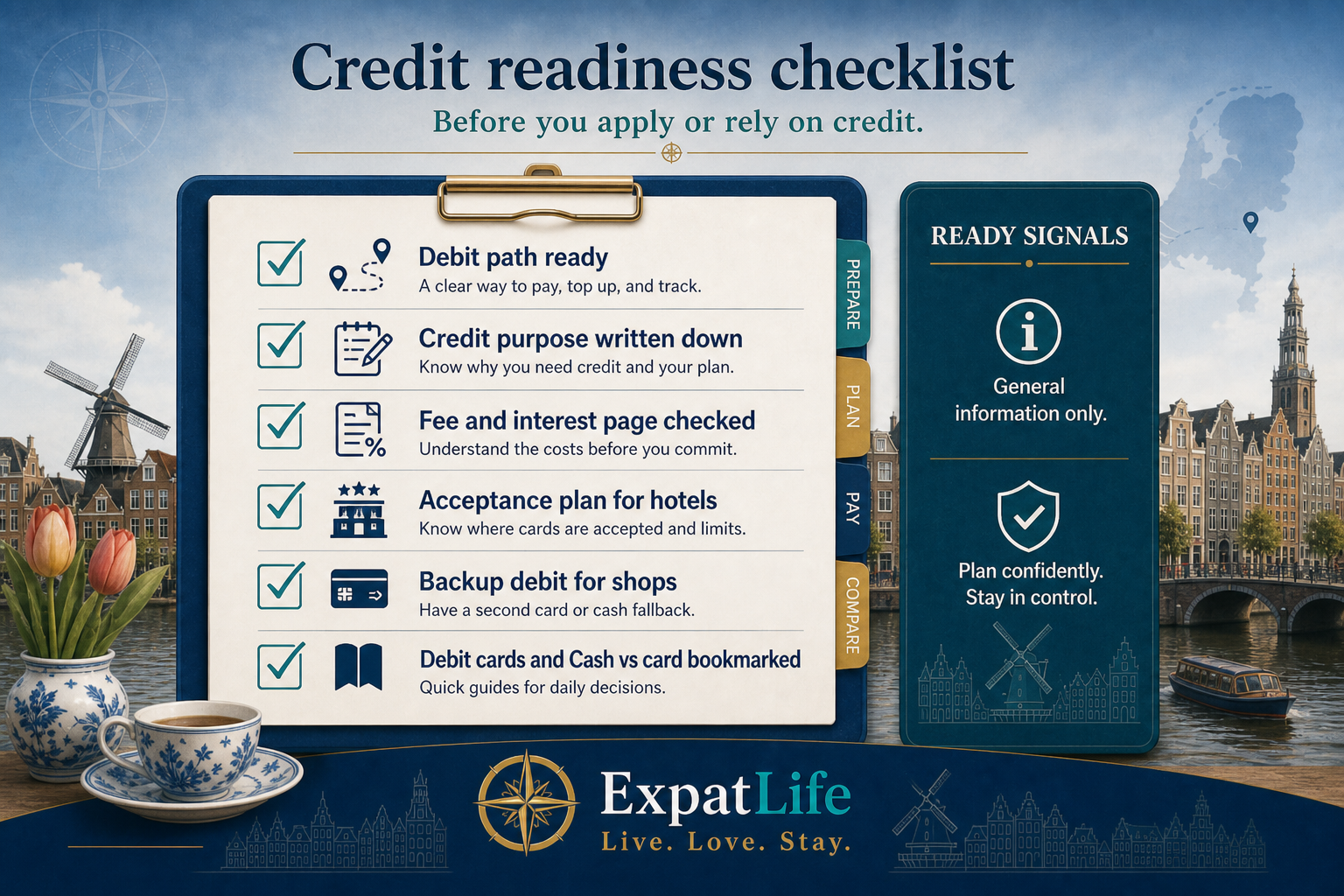
Credit readiness checklist
How-to
A practical sequence for newcomers — banks and merchants remain authoritative.
Step 1
Secure a Dutch pinpas path (or a clear foreign debit bridge). Credit should not be your only shop plan. Use Open a bank account and Debit cards.
Step 2
Hotel holds, car rentals, travel bookings, specific online deposits — if the list is empty, you may not need a new credit product yet.
Step 3
Check annual fees, revolving APR, FX markups and cash-advance rules for 2026 (or the current year on the site). Treat blog “best of” lists as non-authoritative.
Step 4
Ask hotels about holds. Carry debit for shops. Keep a modest cash float for markets (Cash vs card).
Step 5
Submit accurate documents. If declined or delayed, ask the issuer — then decide whether to wait, fix paperwork, or stay on your bridge card.
Tools
Use tools for account and cost planning — then verify credit products and fees on each issuer’s official pages.
FAQ
Short answers for the searches expats ask most often about credit cards in the Netherlands.
Not for most weekly shopping — debit is the usual shop default. Credit is often useful for hotel holds, some rentals and certain travel or online deposits. Decide based on your use-cases, not home-country habit alone.
No. A pinpas spends from your everyday account. A credit card is a separate credit product with its own fees and repayment terms. See Debit cards for PIN culture.
Often yes for major networks, but fees, FX and occasional declines still happen. Many everyday shops prefer debit. Carry a backup method.
Sometimes — issuers set eligibility (identity, address, income and other signals). Approvals are not guaranteed. Verify requirements on the issuer’s site after you have a clear use-case.
Annual or package fees, interest if you revolve, FX markups and cash-advance costs. Treat any figures on blogs as non-authoritative; confirm the current year tariff with the issuer.
Many place a temporary deposit hold. Ask what they accept before arrival. Keep debit for other spending during the stay.
On How payments work — that rails topic is separate from credit product orientation on this page.
No. This is general orientation for newcomers. Banks, merchants and networks set their own rules — verify fees, interest and acceptance with them.
Related
Live cluster siblings stay linkable — Debit cards, Cash vs card and Wise vs Revolut.
Hub
Return to the Banking hub or jump to Debit cards, Cash vs card, payments rails, and live cluster peers.
Explore next
Master debit culture, till cash pockets, payment rails, open an account, or shortlist banks.
Trust
Confirm acceptance habits and fees with merchants and banks — rules change.
Some links on related banking pages may be affiliate links. If you use them, we may earn a commission at no extra cost to you. Affiliate status never changes merchant acceptance, issuer approvals or fee schedules.