
Housing
Ask in writing
Before you sign or move in
Netherlands · Family · Pets
Everyday life with dogs and cats after you arrive — housing rules, chip and registration norms, finding a vet, insurance orientation, parks etiquette and typical costs.
General orientation only — not veterinary medical advice, not legal advice on leases, and not a ranking of vets, insurers or brands. Confirm landlord rules in writing, follow your vet for clinical care, and verify municipal leash or park rules where you live.
Quick answer
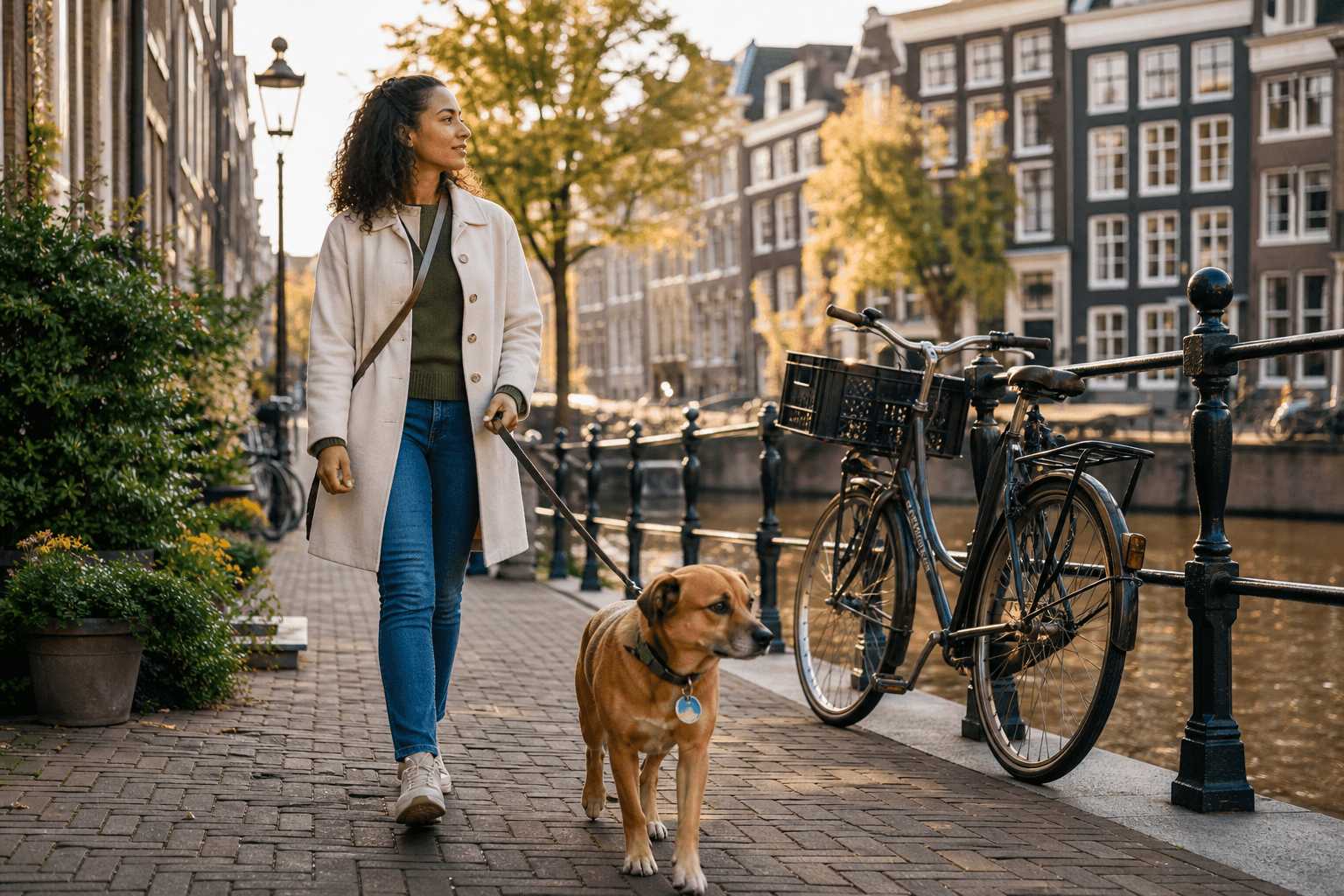
Once you live in the Netherlands, everyday pet life is about housing permission, identification norms, a local vet, optional insurance, public etiquette and realistic monthly costs — not import paperwork.
Import, quarantine and travel documents belong on Bringing pets to the Netherlands. This page is the after-arrival companion for dogs and cats in expat households. Family cluster sibling Giving birth covers birth-day orientation; Parenting covers broader family culture.
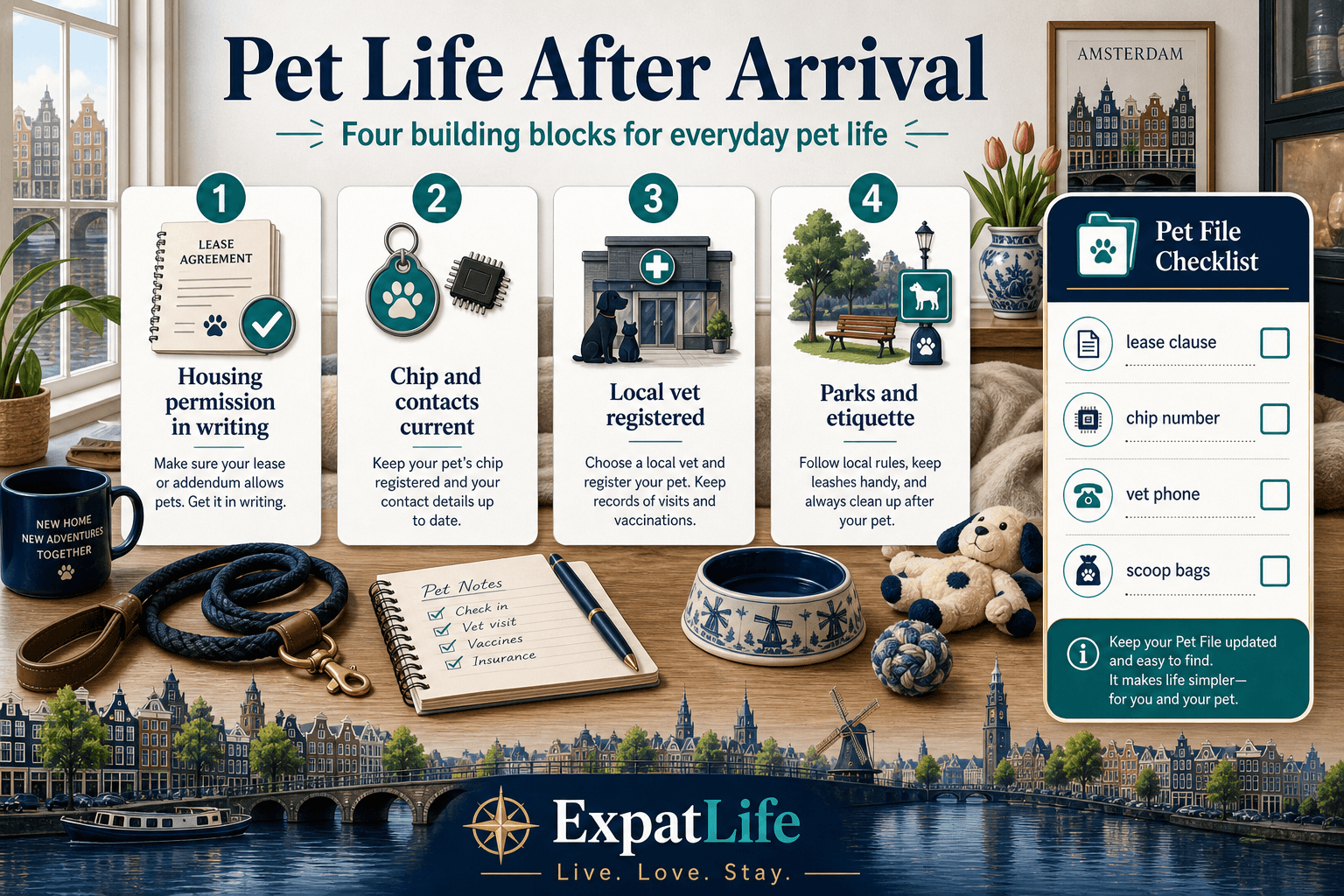
Pet file checklist
Examples
| Situation | How it works here | First step |
|---|---|---|
| We already have a dog and just moved into a rental | Housing permission and neighbour/VvE rules come first — then local vet and park etiquette. | Confirm the pet clause in writing and book a settling-in vet visit. |
| We want to adopt a cat after arrival | Adoption is easier when housing allows pets and you have a vet lined up for first checks. | Get landlord permission in writing, then ask shelters or reputable adoption channels about process and fees. |
| We are still finishing pet import paperwork | Import rules and travel documents live on the Bringing pets move guide — this page starts after arrival. | Finish travel requirements on Bringing pets, then return here for housing, vet and everyday life. |
Snapshot
Six cards cover housing permission, identification, local vet care, insurance orientation, public etiquette and everyday costs — deeper sections expand each theme without veterinary advice.

Housing
Ask in writing
Before you sign or move in
ID
Chip + contacts
Keep details current
Care
Local vet first
Save emergency hours
Public
Leash & scoop
Follow local signs
Rentals and apartments often set pet rules — get them in writing before you move a pet in.
Microchips and up-to-date owner contacts help if a pet is lost; confirm norms with your vet.
Choose a nearby practice, transfer history, and save emergency / after-hours contacts.
Optional cover — compare waiting periods, exclusions and claim rules yourself.
Leash zones, off-leash areas when signed, scoop bags and bike-path awareness.
Food, routine care, gear and a buffer for unexpected visits — plan ranges, not guarantees.
Housing
Pet-friendly housing is not automatic in the Netherlands. Many landlords, agencies and apartment associations (VvE) set conditions, bans or deposits. Confirm rules before you sign or before you bring a pet into an existing home.
Ask specifically about dogs, cats, size or breed limits, balconies, and whether written approval is required. Keep email or contract language — verbal nods are hard to enforce later.
If you are still searching for a home, treat pet permission as a filter alongside budget and commute. Renting and housing guides help with the wider search; this section focuses on the pet clause.

| Topic | What to check | Tip |
|---|---|---|
| Lease / contract | Explicit pet clause, ban, or “permission required” wording | Request a short written confirmation if the clause is vague |
| Landlord / agency | Whether pets need prior approval and any fee or deposit | Ask before viewings so you do not waste scarce appointments |
| VvE / building rules | Apartment house rules on pets, noise and common areas | A landlord yes can still conflict with building rules — check both |
| Moving a pet in later | Whether permission can be added after you already live there | Get approval in writing before adopting or relocating a pet mid-lease |
Save landlord emails and keep the signed clause. Screenshots of chats are better than memory.
Barking, hallway accidents and litter smells are common complaint themes — plan training and cleaning habits early.
Hotels, short-stays and some temporary housing have separate pet policies — confirm before you book.
Identification
Identification helps reunite lost pets. In Dutch everyday practice, microchips and up-to-date owner details are the practical baseline — exact registration databases and legal duties can depend on species, municipality and current rules.
Ask your veterinarian what is expected for your dog or cat after arrival: chip check, passport or registration documents, and how to update your address and phone number.
If you brought a pet from abroad, import timing and certificate rules belong on Bringing pets. Once you live here, keep local contact details current so a found pet can be returned to you.
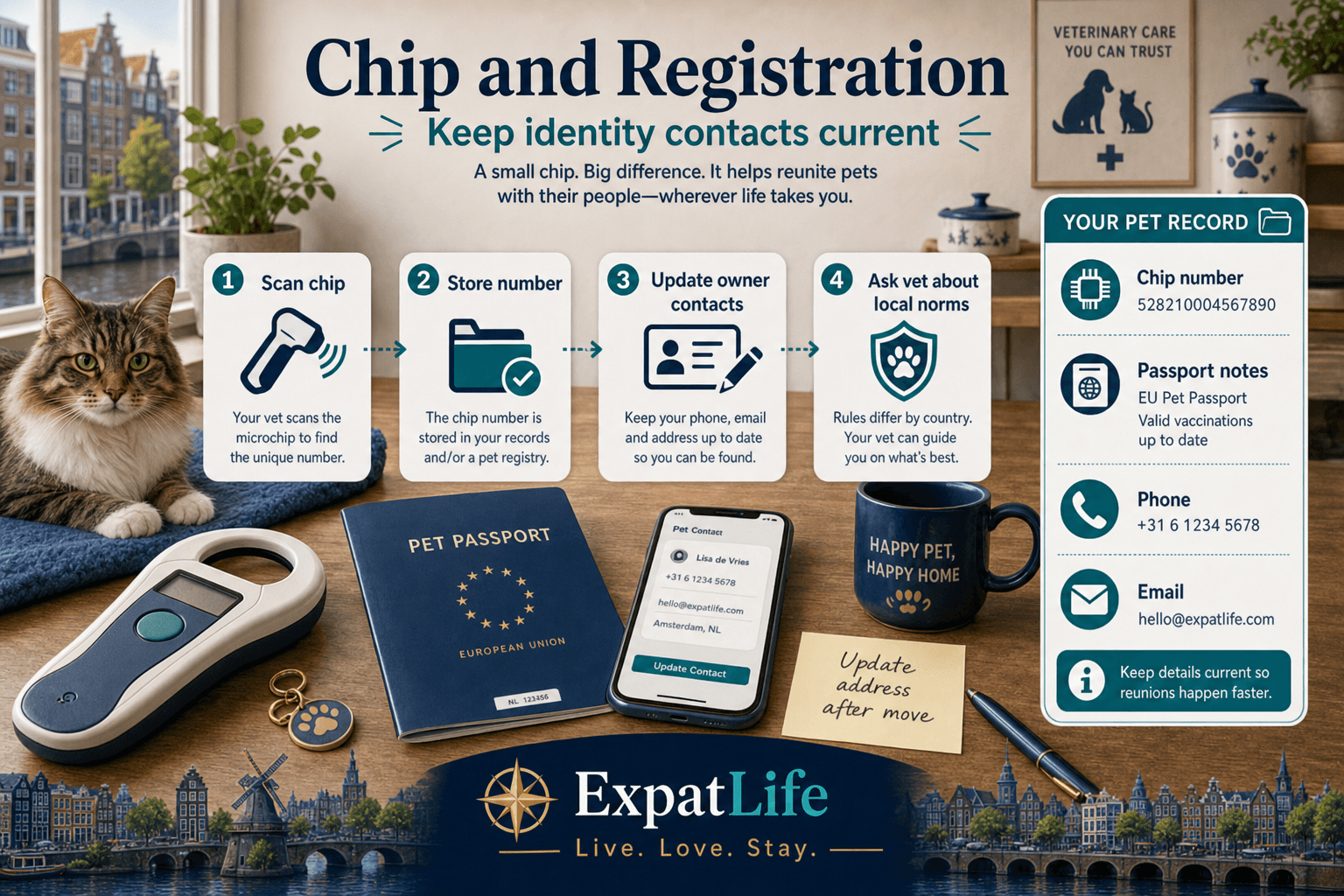
A settling-in appointment is a good moment to scan the chip and review vaccination history.
Know who to call: vet, municipal tips if any, and local lost-and-found groups — without sharing personal data unsafely.
Your vet decides clinical and identification steps for your animal — this page is orientation only.
Care
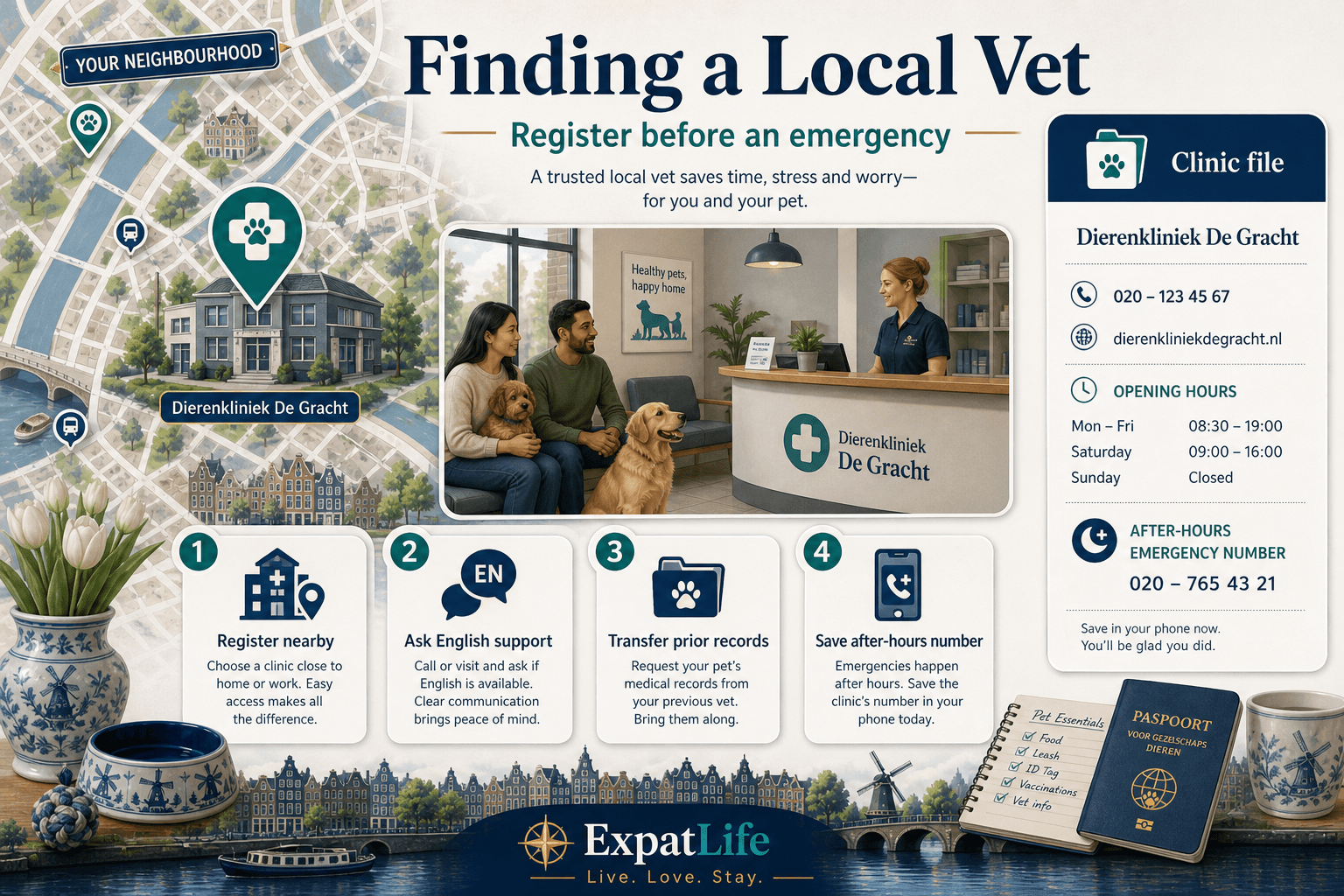
Register with a local dierenarts (veterinary practice) early — ideally before an urgent problem. Practices vary on English support, appointment lead times and how they handle evenings and weekends.
Search by neighbourhood, ask fellow expats for orientation (not rankings), and call to ask about new-client intake, vaccination review and emergency pathways. Transfer prior records when you can.
Urgent care is not the same everywhere: some practices share after-hours cooperatives; others redirect to specific clinics. Save the number you are told to use — do not invent a “best ER” list from social media alone.
| Topic | What to check | Tip |
|---|---|---|
| New-client intake | Whether they accept new patients and how soon | Book a routine settling visit before summer holiday weeks if you can |
| Language | English support for consults and written instructions | Ask what to bring (passport, history, chip number) |
| After hours | Evening / weekend / holiday pathway | Save the exact number or clinic name they recommend |
| Records | How to share previous vaccines and treatments | Digital copies in one folder speed the first visit |
A slightly farther “famous” clinic helps less than a reachable practice you will actually use.
Ask about parasite prevention, dental checks and vaccine schedules appropriate for Dutch life — follow your vet.
ExpatLife does not rank veterinarians or award clinics — choose based on access, communication and trust.
Cover
Pet insurance (dierenverzekering) is optional in the Netherlands. Some households buy cover for unexpected veterinary costs; others self-fund with a savings buffer. There is no single “best” policy — compare cover, exclusions, waiting periods and claim processes yourself.
Indicative 2026 premium bands for mainstream dog and cat packages often land around €20–€50 per month for dogs and €10–€26 per month for cats, depending on age, breed, annual cover ceiling, deductible and whether you choose basic accident/surgery cover or broader illness packages. Older pets, large breeds and “all-risk” style plans can sit higher.
Typical questions: accident vs illness cover, dental or chronic conditions, age limits at signup, co-payments, annual maxima and whether pre-existing issues are excluded. Read the policy conditions, not just marketing headlines.
This section is orientation only — not a product ranking, not financial advice, and not a promise that any insurer will pay a claim. Verify live quotes on insurer or comparison sites.

| Category | Planning range | Notes |
|---|---|---|
| Cat — basic to mid cover | Often ~€10–€26 / month | 2026 orientation; age, breed and deductible change quotes |
| Dog — basic to mid cover | Often ~€20–€50 / month | Larger / older dogs and broader packages cost more |
| Broader / higher-limit packages | Can exceed €45–€80+ / month | Confirm annual maxima, waiting periods and exclusions |
| Deductible / eigen risico | Often ~€50–€150 / year (examples) | Higher deductible usually means lower premium — check claim maths |
Insurance and an emergency savings buffer can complement each other — decide consciously for your risk tolerance.
Breed, age and pre-existing condition clauses often decide real-world usefulness more than the brand name.
Confirm current 2026 terms with the insurer or comparison site — pages and products change.
Public space
Public space rules for dogs vary by municipality and even by park zone. Assume leash and scoop obligations unless signs clearly allow otherwise. Cats that go outdoors raise different neighbour and traffic considerations in dense neighbourhoods.
Watch for on-leash areas, designated off-leash fields, playground exclusions and seasonal nesting restrictions. Bike paths and tram areas need extra attention — Dutch traffic expects predictable behaviour.
Apartment life adds hallway etiquette: dry muddy paws, quiet hours, lift manners and litter odour control. Family activities guides cover parks for kids; here the focus is pet manners in shared space.
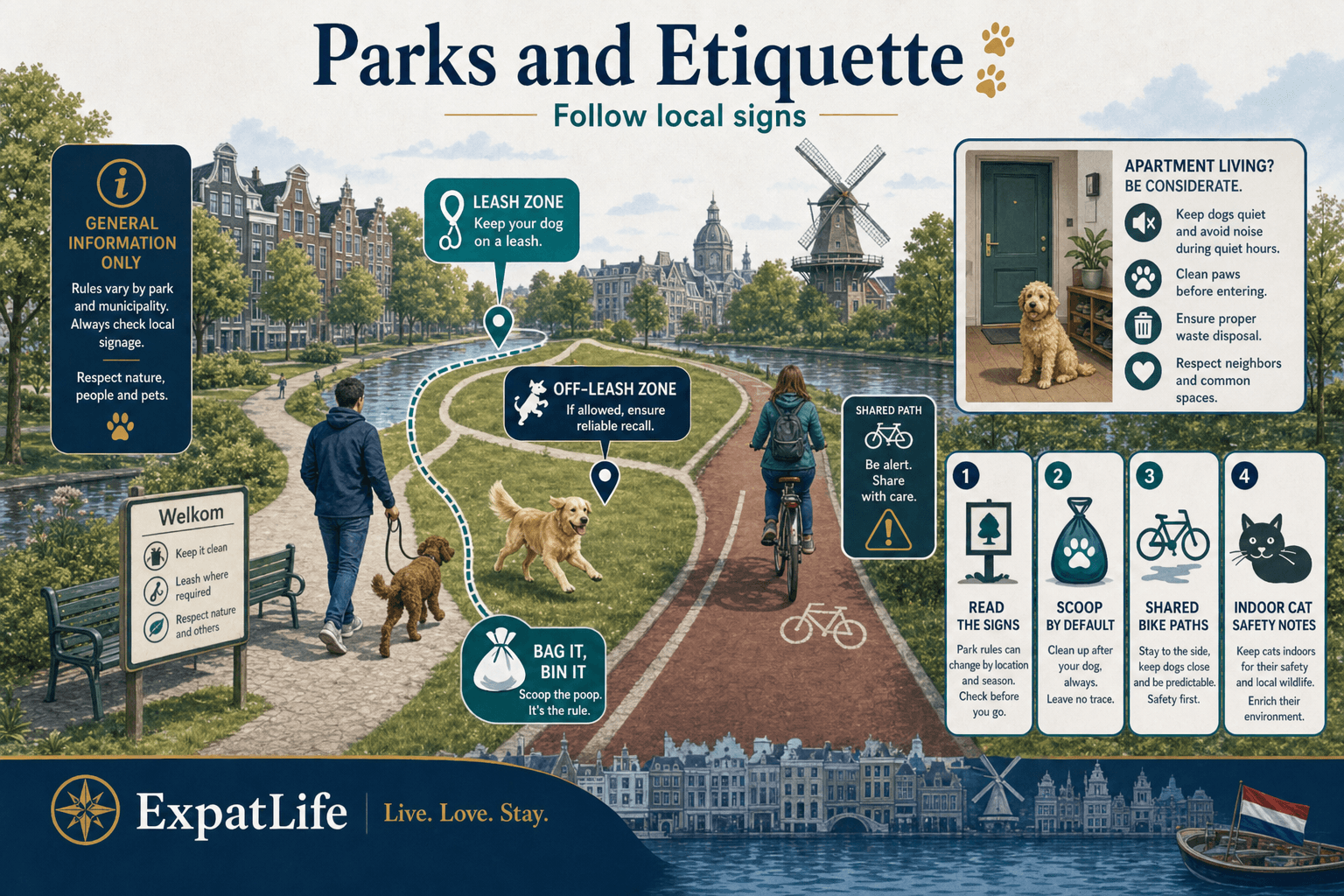
Local pictograms beat habits from your previous country. When unsure, leash on.
Carry bags every walk. Leaving waste is a fast way to sour neighbours and landlords.
Keep dogs close near bikes, cargo bikes and children’s scooters.
Many urban cats live indoors or on secured balconies — discuss safety with your vet if relevant.
Budget
Monthly costs vary by species, diet, city prices and whether you use daycare, sitters, training or insurance. The euro bands below are planning orientation for 2026 — your vet, municipality and local providers set real prices.
Budget for food, litter or walking gear, routine visits, preventatives your vet recommends, optional insurance, and a buffer for unexpected care. One-off setup (carrier, bed, baby gate, balcony screens) often hits in month one.
Paid help is the big swing item for office households: daycare, walkers, overnight sitters and boarding can dwarf food spend in busy months. Training courses are usually a discrete outlay rather than a monthly line.
Import travel costs belong on Bringing pets. Here the focus is ongoing life after you settle.

| Category | Planning range | Notes |
|---|---|---|
| Food & consumables | €25–€90+ / month | Diet, size, litter and brand drive the spread |
| Routine vet consult (non-urgent) | Often ~€45–€75 per visit | Ask your practice; city clinics can sit higher |
| Preventatives & yearly rhythm | Often ~€10–€30 / month equivalent | Vaccines, parasite control and check-ups averaged over the year |
| Insurance (if chosen) | Cats ~€10–€26 · dogs ~€20–€50 / month | Broader packages and older pets can cost more — see Insurance |
| Dog daycare | Often ~€13–€35 / day | Subscriptions and region change the rate |
| Boarding / pension (overnight) | Often ~€20–€55 / night | Size, season and high-care needs raise prices |
| Dog walking | Often ~€10–€25 / walk | Duration, group vs solo, and city premium matter |
| Pet sitting (home / overnight) | Often ~€25–€50+ / night or visit packs | Marketplace and private sitters vary widely — meet first |
| Training (group course) | Often ~€100–€250+ per course | Puppy / basic obedience blocks; private sessions extra |
| Unexpected care buffer | Keep €500–€2,000+ accessible | Diagnostics and procedures can spike quickly even with insurance |
Setup gear plus a settling vet visit often make month one cost more than a steady month.
Two to three daycare or walking days a week can add €150–€400+ per month — price the weekday plan before you commit.
A simple note of real spend beats generic online averages — then revisit insurance vs buffer.
ExpatLife does not promote fabricated discounts, clinic awards or guaranteed claim payouts.
Provider listings
Soft CTAs for insurance comparison, mainstream Dutch pet policies, sitting/walking marketplaces and everyday supplies. Confirm premiums, cover and availability on official sites — this is not a ranking of vets or trainers.
Scenarios
Match your situation to a calm first step — then deepen in the sections above.

Examples
| Situation | How it works here | First step |
|---|---|---|
| Landlord said yes verbally | Verbal permission is fragile in disputes or when staff change. | Ask for email or contract wording before the pet moves in. |
| Pet seems healthy but records are abroad | Dutch vets still need history and a chip check for continuity. | Book a settling visit and bring digital copies of prior records. |
| We work long office days | Dogs especially need a realistic daytime plan — walker, daycare or schedule redesign. | Trial a sustainable weekday routine before adding more pets. |
| Weekend trips and holidays | Pet sitting, boarding and travel rules need lead time. | List trusted sitters or boarding options and their booking windows. |
| Still completing import steps | Travel documents are a move task, not an everyday-life shortcut. | Use Bringing pets for import; return here for housing and local care. |
Avoid
These patterns create avoidable stress — written housing permission and a local vet beat last-minute improvisation.

Many competitive rentals ban pets or require written approval.
Fix: Filter listings and confirm clauses before you emotionally commit.
Waiting until an emergency wastes time when every minute feels urgent.
Fix: Register and save after-hours instructions in week one.
A chip without your current phone number slows reunions.
Fix: Update details after moves; keep the number in your phone too.
Complaints escalate to neighbours, landlords and fines in some places.
Fix: Follow signs; carry bags; keep dogs predictable near bikes.
Unexpected diagnostics can exceed a month of routine spend.
Fix: Keep a reserve or knowingly choose insurance after reading exclusions.
Certificate timing and airline rules deserve the dedicated move guide.
Fix: Use Bringing pets for entry paperwork; use this page for life after arrival.
Ready
Work through this in your first weeks in a Dutch home — or before you adopt locally.
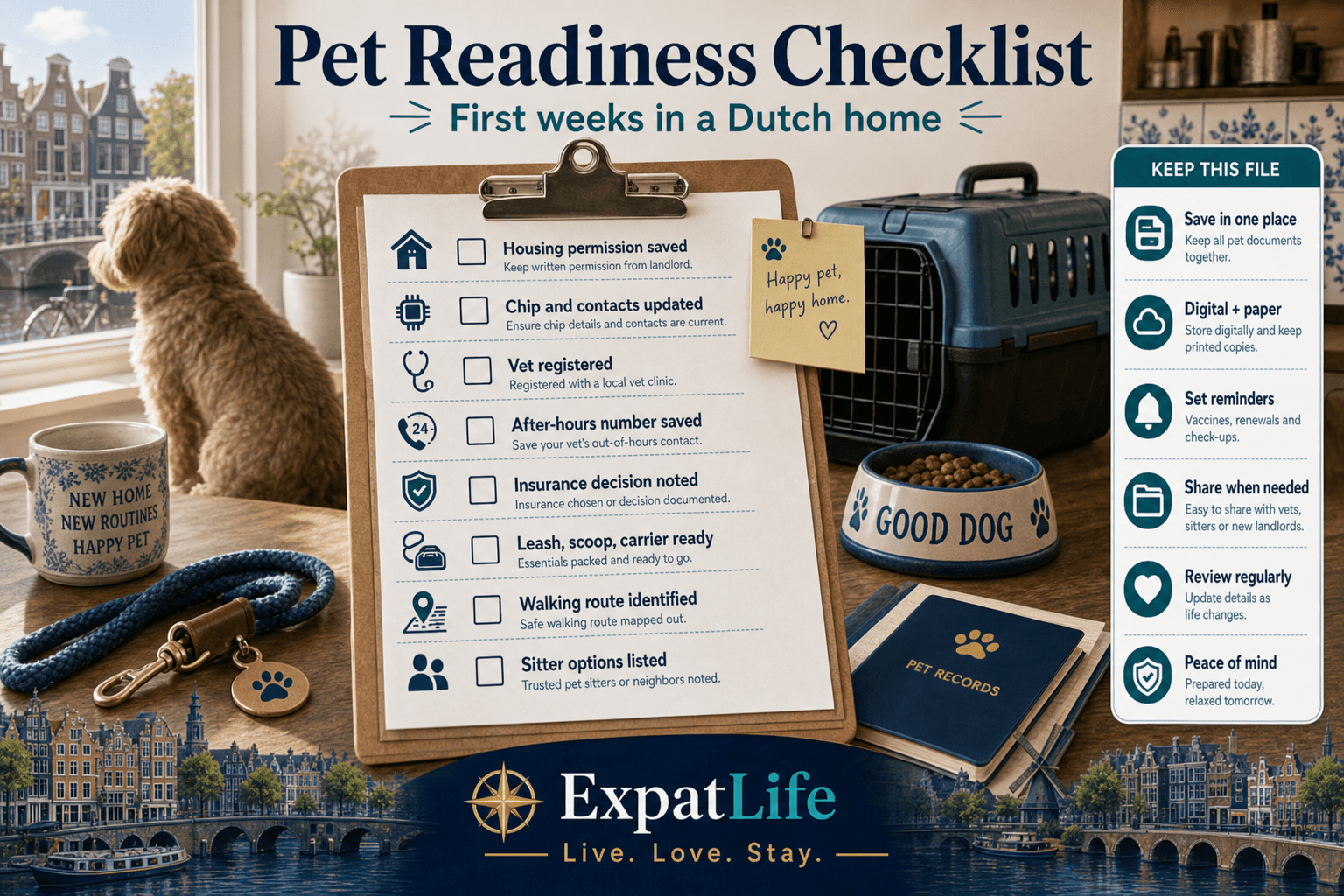
Pet life readiness checklist
How-to
Five orientation steps for expats setting up everyday pet life after arriving in the Netherlands.
Step 1
Check the lease, landlord email and any building rules. Do not move a pet in on a verbal maybe.
Step 2
Register with a nearby practice, share prior records, confirm chip details and ask about after-hours care.
Step 3
Make sure chip registries or passport details show your Dutch address and phone number as advised by your vet.
Step 4
Map leash zones, carry scoop bags, and practise calm behaviour on bike-heavy paths.
Step 5
Budget food, routine care and a buffer — decide knowingly on insurance after reading exclusions.
FAQ
Short answers for the searches expats ask most often about living with pets in the Netherlands.
It depends on the landlord, agency and building (VvE) rules. Some homes allow pets, others ban them or require written permission. Always confirm in writing before you sign or move a pet in.
Microchip identification is a common practical standard and often ties into registration or passport workflows. Ask your veterinarian what applies to your pet and how to keep owner contact details current.
Call nearby practices and ask about English support, new-client intake and emergency hours. Expat communities can share orientation, but choose based on access and communication — not social-media rankings.
No. Pet insurance is optional. Indicative 2026 premiums often land around €10–€26 per month for cats and €20–€50 for dogs for mainstream packages, with broader cover costing more. Some owners buy a policy; others keep a savings buffer. Compare exclusions, waiting periods and annual maxima carefully if you buy cover.
Orientation only for 2026: dog daycare often ~€13–€35 per day; boarding/pension ~€20–€55 per night; walks ~€10–€25; overnight sitting varies widely (often tens of euros per night). Group training courses commonly land around €100–€250+. Always confirm live rates with local providers.
Only where local signs allow it. Many areas require a leash. When unsure, keep the leash on and follow municipal rules for your city.
Use the Bringing pets to the Netherlands move guide for import rules, documents and travel timing. This Pets page covers everyday life after arrival.
No. ExpatLife provides general orientation only. Follow your veterinarian for clinical care and confirm lease or municipal rules with the responsible parties.
Related
Bringing pets owns import paperwork. Giving birth is the family cluster sibling. Parenting, family activities and renting deepen everyday life around pets.
Hub
Stay inside the family cluster — pets, giving birth, parenting and activities — plus the Bring pets move guide.
Explore next
Continue to import paperwork, the giving-birth sibling, parenting culture, renting or family outings.
Trust
Confirm clinical care with your veterinarian and lease rules with your landlord — these sources are orientation only.
General information only. Not veterinary, legal or insurance advice. Some links may be affiliate links; if you use them, we may earn a commission at no extra cost to you.